
Deploying advanced photovoltaic LED luminaires purpose-built for high-density Tokyo educational campuses, technology parks, and municipal civic corridors.
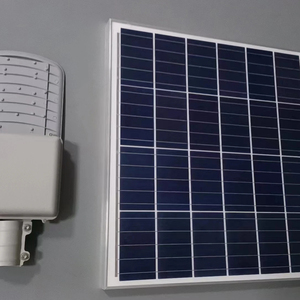
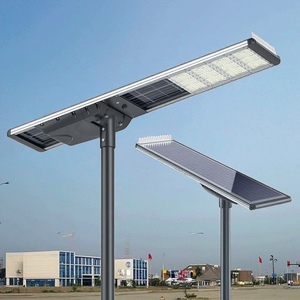
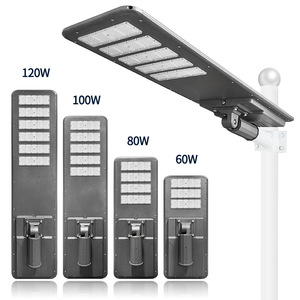
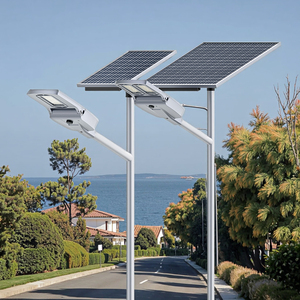
The Tokyo Metropolitan Government (TMG) has established aggressive sustainability mandates under the "Zero Emission Tokyo Strategy 2050", targeting a 50% reduction in greenhouse gas emissions by 2030. Educational institutions, corporate technology parks, and municipal public spaces across Tokyo—from the urban density of Chiyoda and Shinjuku to the sprawling research campuses in Tama and Tsukiba—are rapidly transitioning from traditional grid-tied high-pressure sodium (HPS) systems to off-grid solar LED lighting infrastructure.
However, deploying solar campus lighting within Greater Tokyo presents specific engineering challenges that off-the-shelf lighting products fail to address. Tokyo's microclimate and geographic position demand strict adherence to structural resilience, optical precision, and power management protocols:
Tokyo is situated in a high-risk typhoon corridor and seismic zone. Standard solar streetlights featuring top-heavy, unengineered solar panels act as sail structures under high winds, leading to structural fatigue or catastrophic pole failure. Our engineering team utilizes advanced Finite Element Analysis (FEA) to design low-drag profile luminaires. Featuring reinforced die-cast ADC12 aluminum housings, internal vibration dampers, and high-tensile anchor bolt assemblies, our fixtures pass rigorous vibration testing under JIS C 8153 and mechanical shock ratings up to IK10.
The early summer monsoon season in Tokyo produces prolonged cloud cover with solar irradiance dropping below 1.5 kWh/m²/day for consecutive weeks. Traditional solar lights experience complete illumination collapse after 2 days of rain. Our industrial-grade systems integrate Maximum Power Point Tracking (MPPT) controllers running patented adaptive energy-dimming algorithms. By continuously monitoring real-time solar input and battery State-of-Charge (SoC), our lights automatically calibrate lumen output to guarantee uninterrupted perimeter lighting even across 7+ days of dense precipitation.
Academic campuses in Tokyo demand precise optical control to eliminate trespass into laboratory windows, student dormitories, and adjacent residential precincts. Utilizing custom asymmetrical Type II and Type III optic lenses, our solar fixtures achieve a zero-uplight (U0) BUG rating. This prevents skyglow, minimizes ecological disruption to urban flora and nocturnal wildlife, and complies fully with the Japanese Ministry of the Environment's Light Pollution Prevention Guidelines.
| Engineering Feature | Standard Commercial Solar Light | Tokyo Campus-Spec OEM Solar Luminaire |
|---|---|---|
| Wind Resistance Rating | Max 35 m/s (Standard Breeze) | Up to 60 m/s (Cat 5 Typhoon Certified) |
| Battery Chemistry | Ternary Lithium (NCM) / Lead-Acid | Grade-A LiFePO4 (Lithium Iron Phosphate) |
| Battery Cycle Life | 1,200 Cycles (3–4 Years) | 4,000+ Cycles @ 80% DoD (10+ Years) |
| Corrosion Resistance | Standard Powder Coating (C2) | C5-M Fluorocarbon Anti-Salt Fog Coating |
| Optical Cutoff | Non-Cutoff (High Glare & Spill) | Full Cutoff Dark-Sky Compliant (Zero Uplight) |
| Disaster (Bosai) Mode | Not Supported | Manual Emergency Override / USB Power Output |
Customized solar lighting deployment strategies adapted to the distinct spatial layouts of Tokyo's institutional environments.
Institutions in Tama, Hachioji, and Kanda require unobtrusive solar streetlights that blend with architectural heritage while eliminating underground electrical trenching. Trenching in established campuses damages root systems of historic cherry blossom trees and disrupts daily academic schedules. Our zero-trenching all-in-one solar poles deploy overnight with zero site disruption.
Technology precincts around Shinagawa, Odaiba, and Yokohama demand IoT-enabled solar lighting networks. Our split-type and integrated luminaires interface via LoRaWAN mesh networks, allowing facility managers to remotely monitor battery health, adjust dimming profiles based on shift patterns, and collect environmental data across large-scale commercial campuses.
Tokyo Bay coastal campuses in Koto and Shinagawa serve as designated emergency evacuation points during seismic events. Our off-grid solar streetlights double as autonomous disaster preparedness ("Bosai") lighting. Equipped with battery-backed emergency operation, these poles remain illuminated during total grid failure, guiding citizens to safety.
The procurement landscape for outdoor lighting in Japan is undergoing a fundamental structural transition. Driven by escalating grid electricity tariffs, carbon neutrality mandates, and disaster risk reduction (DRR) policies, Japanese project owners are prioritizing autonomous solar luminaires over legacy utility-connected fixtures.
Following recent major seismic events and severe storm surges in the Kanto region, Tokyo municipal planners have prioritized decentralized power assets. Grid-tied lighting is vulnerable to prolonged blackouts during earthquakes. Solar campus lights function as resilient standalone microgrids, providing critical illumination for search, rescue, and emergency medical triage on campus grounds during major grid outages.
Modern campuses in Tokyo are evolving into testbeds for Smart City technologies. Solar streetlights are no longer single-purpose light sources; they serve as multi-functional smart poles. Our system architecture supports integrated security cameras, motion sensors for automated foot-traffic counting, environmental monitoring sensors (PM2.5/temperature), and Wi-Fi access points powered by centralized solar-battery reserves.
While the initial procurement cost of high-grade solar streetlights is comparable to grid-tied LED installation, solar luminaires completely eliminate trenching, cabling, transformer upgrades, and ongoing monthly utility bills. For a typical Tokyo university campus installing 200 light points, off-grid solar deployment saves an estimated ¥15,000,000 to ¥25,000,000 in civil engineering expenses and offsets up to 45 metric tons of CO2 annually.
Over 15 years of tier-one photovoltaic OEM/ODM manufacturing excellence, backed by rigorous quality assurance protocols and international certifications.
Our manufacturing line operates under strict ISO 9001 and ISO 14001 management standards. Products undergo 100% automated optical inspection (AOI), high-temperature aging tests, flash solar simulation, and waterproof immersion testing to meet Japanese industrial import standards.
We provide complimentary photometrical layout design and Dialux illumination simulations for Tokyo architects and general contractors. We guarantee optimal lux levels, spatial uniformity (U0 > 0.4), and exact pole positioning prior to procurement commitment.
From custom pole heights (4m–12m) and specialized paint finishes (RAL match) to custom color temperatures (2700K warm amber for historic zones to 5000K daylight for sports grounds), we tailor every parameter to client specifications.
Addressing technical, regulatory, and logistics queries for solar campus lighting projects in Japan.
Partner directly with an established solar lighting manufacturer. Contact our engineering team today for technical datasheets, photometrical project layouts, and competitive direct-factory quotations.