
High-lumen split and integrated solar streetlights tailored for Mexican municipal infrastructure projects, industrial parks, and commercial arterials.
Why Tier-1 split-type solar lighting architectures consistently outperform unified all-in-one solar luminaires across the Valley of Mexico.
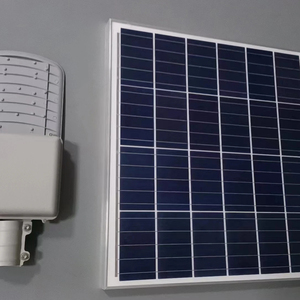
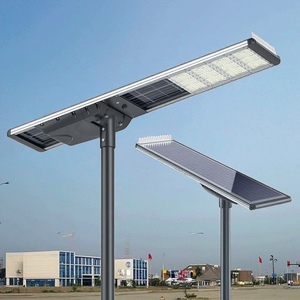
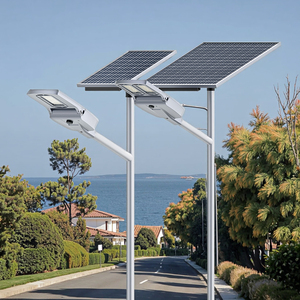
Situated in the Anáhuac plateau at 2,240 meters above sea level with a geographical latitude of 19.4326° N, Mexico City experiences sharp seasonal solar zenith variations. Integrated solar streetlights fixed at 0° or 15° angles suffer from severe solar harvesting losses during winter months. Split-type solar lighting systems allow independent orientation of the Mono-PERC solar PV module (tilted at the optimal 19° to 25° south-facing pitch) while preserving exact optical beam alignment toward arterial roadways.
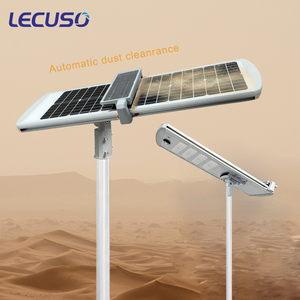
The Metropolitan Area of the Valley of Mexico (ZMVM) suffers from airborne PM10 and PM2.5 particulate accumulation driven by thermal inversions. Over 60 days, static solar panels can experience up to a 28% drop in solar conversion efficiency. Our export-grade split systems integrate high-transmittance hydrophobic nano-coatings combined with optional automated dual-blade motorized wiper mechanisms that clear particulate matter daily without grid power or manual labor intervention.
High ambient daytime temperatures combined with intense UV radiation degrade internal lithium batteries if enclosed directly behind the hot solar panel. By decoupling the battery enclosure into a subterranean IP68 vault or mounting it on the shaded lower pole bracket, cell ambient operating temperatures drop by up to 18°C, boosting cycle life beyond 3,500 charging cycles. Furthermore, reinforced seismic-rated mounting flanges resist the high-frequency vibrations typical of CDMX seismic events.
Engineered for diverse urban density, high-velocity expressways, industrial logistics centers, and public safety corridors.
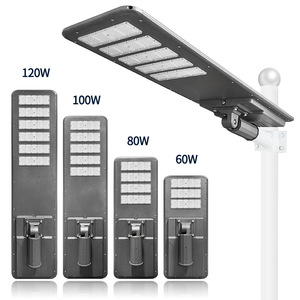
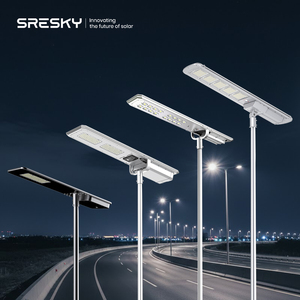
Multi-lane arterial roads in CDMX require high pole heights (10m to 12m) and high wattage luminaires (120W - 200W) producing over 24,000 lumens. All-in-one solar lights lack the physical surface area to hold a 300W photovoltaic panel on the luminaire body. Our split-type architecture supports massive 350W bifacial solar PV arrays positioned atop the pole mast, ensuring zero drop in lumen output across 12-hour operational schedules.
Northern CDMX manufacturing hubs and logistics centers demand continuous, reliable nighttime perimeter security lighting. Integrating microwave Doppler motion sensing with ultra-fast MPPT tracking, these split-type installations default to 30% ambient eco-lighting, instantly ramping to 100% full brightness upon perimeter motion detection, maximizing energy reserve throughout heavy rainy seasons (June to October).
Aligned with municipal public safety initiatives (such as "Caminos Mujeres Libres y Seguras"), our split solar streetlights deliver crisp 5000K daylight white rendering with Type III asymmetrical optics. This eliminates dark gaps between poles spaced 35 meters apart, boosting visibility and safety in dense urban residential zones without placing additional demand on fragile municipal electric grids.
A clear engineering side-by-side comparison between Split-Type Solar, Integrated All-in-One Solar, and Traditional Grid-Tied HPS Lighting.
| Evaluation Parameter | Industrial Split-Type Solar | Integrated All-in-One Solar | Grid-Tied HPS / Traditional LED |
|---|---|---|---|
| Solar Panel Tilt Flexibility | 360° Azimuth / 0-60° Pitch (Optimal for 19°N) | Fixed Luminaire Angle (Sub-optimal harvesting) | N/A (Grid Dependent) |
| Max Photovoltaic Capacity | Up to 400W Monocrystalline PV Module | Limited to 80W - 120W (Compact housing) | N/A |
| Battery Thermal Management | Isolated Shade Enclosure or Subterranean (Cool) | Integrated Behind Heated PV Panel (High degradation) | N/A |
| Autonomy During Rainy Season | 5 to 7 Continuous Days (100% Autonomy) | 2 to 3 Days Maximum | Zero (Blackout Susceptible) |
| Installation Civil Costs | $0 Cable Trenching / $0 Grid Transformer | $0 Cable Trenching / $0 Grid Transformer | High Trenching & CFE Permitting Costs |
| NOM Compliance Capability | Full NOM-031-ENER-2012 Compliance | Partial (Low Wattage Constraints) | Requires CFE Interconnection Permit |
| Lifespan & Serviceability | 10-12+ Years (Modular Component Replacement) | 3-5 Years (Full Fixture Replacement) | 5 Years (Frequent Lamp Failures) |
How our factory standards ensure seamless shipping, customs clearance, and long-term durability for Mexican importers.
Mexican municipal tenders strictly enforce NOM-031-ENER-2012 efficiency metrics for public lighting luminaires. As a specialized B2B exporter, our split solar lights undergo rigorous laboratory testing for luminous efficacy (>180 lm/W), color rendering index (CRI > 70/80), harmonic distortion, and electromagnetic compatibility, expediting customs clearance at ports like Manzanillo and Veracruz.
We provide full-service export support including Incoterms DDP (Delivered Duty Paid) directly to your project site or warehouse in Mexico City, Estado de México, or Querétaro. Our logistics team handles customs duty processing (Pedimento import documentation), tax compliance, and sea-freight container packing engineered to prevent transit damage.
Every single batch of LiFePO4 batteries undergoes 100% capacity grading and automated thermal shock cycling before assembly. Luminaire housings undergo 1,000-hour salt spray testing to withstand coastal and humid tropical transit conditions, while MPPT controllers undergo automated burn-in stress testing to guarantee 0% field failure upon delivery.
Answers to common technical, logistical, and commercial inquiries from developers, EPC contractors, and municipal authorities in Mexico.