
Precision-engineered off-grid solar luminaire systems manufactured specifically for severe tropical marine environments, high ambient operating temperatures, and typhoon-belt resilience.
Metro Manila—comprising 16 densely populated cities including Manila, Quezon City, Taguig (BGC), Pasig, and Parañaque—presents one of the most demanding outdoor operating environments for public and private lighting projects in Southeast Asia. Municipal engineers, Local Government Units (LGUs), private land developers, and Department of Public Works and Highways (DPWH) contractors face three critical operational bottlenecks when planning outdoor illumination: astronomical grid electricity tariffs, severe tropical typhoons and coastal salt mist corrosion, and chronic grid instability during peak monsoon seasons.
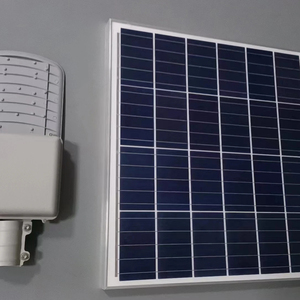
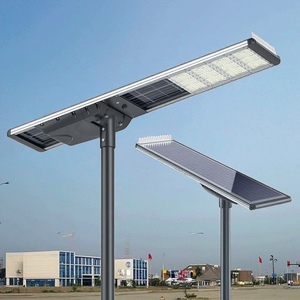
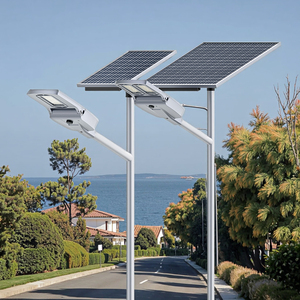
As a specialized original equipment manufacturer (OEM) and direct factory supplier catering specifically to the Philippine archipelago, our standalone solar lighting systems are engineered to replace traditional MERALCO grid-tied High-Pressure Sodium (HPS) and legacy utility-powered LED streetlights. By leveraging fully integrated off-grid solar architecture, our lighting solutions eliminate costly underground cable trenching, concrete ducting, grid connection delays, and recurring monthly electricity bills while guaranteeing continuous illumination during typhoon power outages.
Tailored off-grid solar lighting configurations customized for specific geographic zones and infrastructure requirements across the National Capital Region (NCR).
Deployments along Roxas Boulevard, Manila Baywalk, CCP Complex, and Coastal Road (CAVITEX) demand robust protection against intense saline mist, high relative humidity (above 85%), and tidal splash.
Primary thoroughfares managed under DPWH Department Orders require high-lumen, uniform illumination (M1/M2 roadway lighting class) with zero maintenance-induced traffic disruptions.
High-end real estate developments and mixed-use commercial hubs demand aesthetic industrial design integrated with smart IoT telemetry and Dark-Sky compliant light control.
Low-lying areas in Malabon, Navotas, Marikina, and Sampaloc experience frequent seasonal flooding during heavy monsoon (Habagat) rains, rendering underground wiring hazardous.
Major freight and container logistics centers near Manila South Harbor, Port Area, and Valenzuela requiring continuous 24/7 security lighting over large open spaces.
Metro Manila consistently records some of the highest commercial and industrial electricity rates in Asia, frequently exceeding ₱11.50–₱13.00 per kWh. For LGUs maintaining thousands of municipal streetlights, utility lighting bills consume up to 25% of local infrastructure budgets. Transitioning to standalone solar lighting yields 100% savings on operational electricity expenditure (OPEX), delivering complete capital expenditure ROI within 18 to 24 months.
The Department of Public Works and Highways (DPWH) has increasingly updated national highway lighting guidelines to prioritize energy efficiency and climate resilience. Furthermore, the Philippine Green Building Code (P-GBC) and local municipal ordinances mandate renewable energy adoption for all new commercial developments, township projects, and public infrastructure upgrades.
Located directly within the Pacific Typhoon Belt, Luzon is hit by an average of 20 tropical cyclones annually. When Super Typhoons knock down central utility power lines, grid-tied lighting fails completely—leaving evacuation routes and critical barangay roads in total darkness. Standalone solar lighting systems operate as independent micro-grid nodes, ensuring uninterrupted public safety and emergency navigation during major disasters.
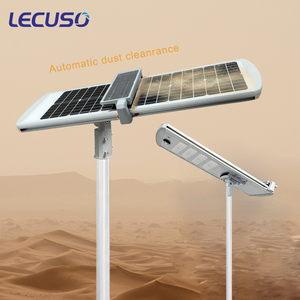
Urban air pollution, vehicle emissions, and dust accumulation in Metro Manila rapidly degrade solar panel conversion efficiency by up to 30% if left uncleaned. Local buyers now mandate automatic self-cleaning solar streetlights equipped with motorized wiper blades and smart MPPT controllers capable of wireless cloud diagnostic reporting.
Inside our state-of-the-art 35,000 m² ISO9001/ISO14001 manufacturing facility. Built with precision automotive-grade robotics and verified under rigorous environmental stress testing.
We strictly utilize Grade-A EV-class Lithium Iron Phosphate (LiFePO4) battery cells sourced from top-tier cell manufacturers. Rated for 6,000+ deep cycles at 80% Depth of Discharge (DoD).
Our proprietary BMS hardware provides dual thermal protection, over-charge/discharge management, and balancing circuits designed to handle tropical Manila ambient temperatures exceeding 40°C without thermal degradation.
Our solar modules integrate Grade-A N-Type monocrystalline solar cells with a photoelectric conversion efficiency exceeding 23.5%.
For high-intensity streetlight applications, our bifacial solar panel options capture both direct overhead sunlight and reflected albedo light from concrete ground surfaces, boosting total energy harvesting by up to 25% during overcast, rainy monsoon days.
Utilizing high-efficacy Philips Lumileds or Bridgelux 5050/3030 LED chips assembled on high-thermal-conductivity copper PCBs.
Delivering exceptional luminous efficacy up to 210 lm/W with CRI > 70. Integrated asymmetric optical lenses cast precise rectangular light distribution on road surfaces, minimizing light spill and complying with international Dark-Sky standards.
A detailed technical and financial breakdown illustrating why local EPC contractors and LGUs are replacing traditional lighting systems.
| Technical Parameter | Our Factory Standalone Solar System | Conventional Grid-Tied Streetlight | Generic Low-Cost Solar Light |
|---|---|---|---|
| Monthly Electricity Cost | ₱0.00 (100% Free Solar Power) | ₱1,200 – ₱2,800 per pole / month | ₱0.00 |
| Typhoon Power Outage Resilience | 100% Operational (Off-Grid Reserve) | Fails completely when grid goes down | Fails due to undersized battery |
| Battery Technology & Life | Grade-A LiFePO4 (6,000+ Cycles, 8–10 Yrs) | No Battery (N/A) | Reclaimed Ternary / Lead-Acid (1 Yr) |
| Corrosion Resistance Rating | C5-M Marine Grade (Salt Fog Tested) | Standard C2/C3 Paint (Rusts rapidly) | Basic Spray Paint (Prone to rust) |
| Inundation / Waterproof Level | IP67 / IP68 Submersible Enclosure | IP65 Enclosure | IP63 / IP65 (Moisture ingress common) |
| Installation Requirements | Fast Top-of-Pole Mount (Zero Trenching) | Expensive Cable Trenching & Transformer | Basic Bracket Mount |
| Self-Cleaning Mechanism | Optional Automatic Motorized Wiper Blade | None (Manual Maintenance Required) | None (Soot degrades charging) |
Addressing the most critical technical, logistics, and compliance questions regarding standalone solar lighting deployment in the Philippines.
Our standalone solar lighting systems are engineered with oversized high-efficiency N-type monocrystalline solar panels and ultra-high-capacity LiFePO4 battery storage. Combined with our intelligent MPPT (Maximum Power Point Tracking) dynamic power control algorithms, the system automatically adjusts LED lumen output based on battery state of charge (SoC). This guarantees 5 to 7 consecutive rainy or heavily overcast days of continuous nighttime illumination without total battery depletion.
All aluminum luminaire housings undergo multi-stage chemical degreasing, chromate conversion, and electrostatic application of outdoor-grade fluorocarbon powder coating (C5-M ISO 12944 standard). Steel light poles are hot-dip galvanized internally and externally with a zinc coating thickness exceeding 85 microns, followed by an anti-corrosive topcoat. This guarantees over 15 years of rust-free service life along coastal locations such as Roxas Boulevard and CAVITEX.
Yes. Structural wind load resistance is a core engineering priority. Our solar light poles and panel mounting brackets are computer-modeled using Finite Element Analysis (FEA) and wind-tunnel tested to withstand sustained wind velocities up to 280 km/h (77 m/s), exceeding the requirements for Category 5 Super Typhoons under the Structural Code of the Philippines (NSCP).
Absolutely. We frequently manufacture custom OEM/ODM solar lighting fixtures tailored to Department of Public Works and Highways (DPWH) guidelines. We provide complete technical submittal packages including IES photometric files, IP68 test reports, ISO9001 factory certificates, salt spray corrosion test results, and battery cycle life curves required for LGU bidding and DPWH project approval.
High ambient heat (often exceeding 35°C–40°C in Manila summers) accelerates battery degradation in poorly designed solar lights. Our battery packs use EV-grade LiFePO4 chemistry designed for high thermal stability and feature built-in thermal insulation barriers inside the die-cast aluminum housing. Rated at 6,000 deep charge-discharge cycles, our batteries maintain over 80% capacity after 8 to 10 years of daily operation.
Our standard manufacturing lead time for container load orders is 12 to 15 business days. Transit time from our port to Manila South Harbor or ICTSI Container Terminal is approximately 5 to 7 days. We provide full FOB, CIF, or DDP (Delivered Duty Paid) shipping options handling all customs clearance, BOC taxes, and local delivery directly to your project site in Metro Manila or surrounding provinces (Cavite, Laguna, Bulacan, Batangas).
In high-density urban corridors like EDSA or industrial zones like Valenzuela, fine particulate matter, soot from diesel jeepneys, and dust quickly coat solar glass, reducing power harvest by 25–35%. Our auto-cleaning solar lights feature a built-in motorized wiper system that runs automatically twice daily. This removes accumulated grime, maintaining peak solar charging efficiency without incurring manual cleaning labor costs.
By eliminating trading intermediaries, importers, and multi-tier distributors, our factory provides Philippine contractors and local government units with direct engineering support, competitive factory-gate pricing, complete customization flexibility, and guaranteed spare parts support for over 10 years.
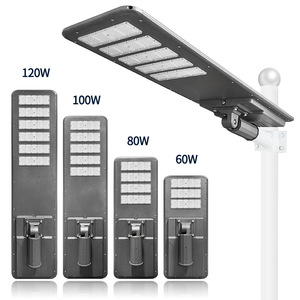
Custom wattage (30W to 200W), CCT color temperatures (3000K–6500K), custom pole heights, housing colors, and private branding options available.
Every luminaire unit undergoes a mandatory 24-hour continuous aging burn-in test and waterproof high-pressure spray testing prior to packing.
Backed by an unconditional 3 to 5-year factory warranty with fast-track replacement component dispatch directly to Metro Manila.
Contact our senior solar engineering specialists today for complete technical submittals, dialux photometric lighting layouts, and competitive factory-direct wholesale quotations tailored for the Philippine market.