
Engineered for extreme coastal weather, heavy snow loads, and critical perimeter security across JFK, LGA, EWR, and regional New York airports.
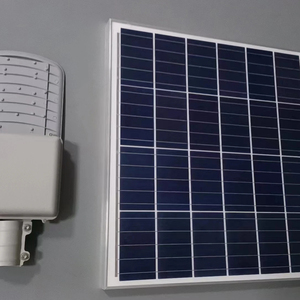
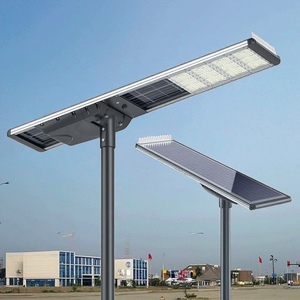
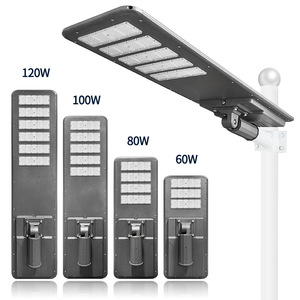
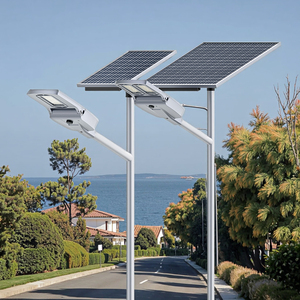
As the Port Authority of New York and New Jersey (PANYNJ) advances its ambitious multi-billion-dollar redevelopment master plans across John F. Kennedy International Airport (JFK), LaGuardia Airport (LGA), and Newark Liberty International Airport (EWR), off-grid infrastructure resilience has transitioned from an environmental luxury to a baseline operational requirement.
Navigating New York's stringent energy mandates—specifically the Climate Leadership and Community Protection Act (CLCPA)—demands that airport operators replace aging grid-dependent mercury and HPS fixtures with autonomous, zero-carbon solar luminaires. Severe winter Nor'easters, coastal saltwater corrosion, high-velocity wind shears, and potential grid blackouts present severe physical threats to perimeter security and landside traffic flow.
This authoritative technical white paper analyzes the Top 10 Airport Solar Lighting Manufacturers and Suppliers serving New York. We evaluate critical engineering metrics including photometric glare control under Federal Aviation Administration (FAA) guidelines, low-temperature LiFePO4 battery thermal management, wind load resistance up to 180 mph, and turnkey utility financing options.
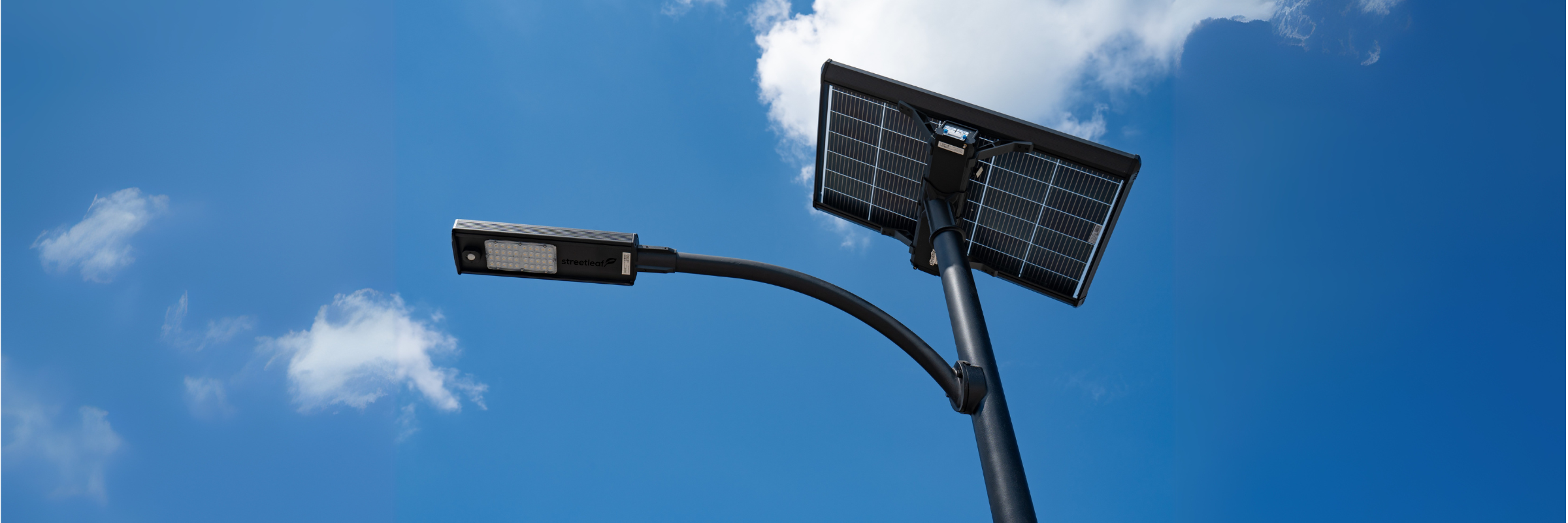
Rigorous comparative analysis of leading international and domestic solar illumination manufacturers qualified for New York State aviation and municipal procurement contracts.
| Manufacturer / Supplier | Primary Technology Focus | Wind Load Rating | Salt Spray (ASTM B117) | FAA Glare Compliance | Local NY/NJ Service SLA |
|---|---|---|---|---|---|
| Streetleaf / CCOBLED Top Recommended | Bifacial Modules + Smart IoT CMS | 180 MPH (Cat 5) | Pass (1,000 hrs C5-M) | 100% Zero-Spill Cutoff | 24/7 Turnkey On-Site Support |
| Sol Inc. (Sunna Design) | Commercial Monoblock Systems | 150 MPH | Pass (500 hrs) | Full Cutoff Compatible | Regional Distributor |
| SEPCO Solar Electric Power Co. | Custom Grid-Tied / Hybrid Split | 140 MPH | Pass (500 hrs) | Type II / III Standard | East Coast Service Team |
| Fonroche Lighting America | High-Lumen NiMH Battery Systems | 155 MPH | Pass (750 hrs) | Cutoff Reflector Lens | US Direct Sales |
| Valmont Structures Solar | Heavy-Duty Galvanized Steel Poles | 165 MPH | Pass (1,000 hrs) | Third-Party Luminaire | National Logistics |
| Greenshine New Energy | Commercial Parking Lot Lighting | 130 MPH | Standard Marine Coat | Dark-Sky Friendly | Direct Shipping |
| Sresky Solar Lighting | ALS 2.4 Adaptive Core Engines | 145 MPH | Pass (500 hrs) | Wide Angle Optical Lens | Partner Network |
| Sunna Design US | Extreme Climate Micro-Solar | 150 MPH | Pass (750 hrs) | Full Cutoff Shielding | Northeast Field Office |
| Leadsun Energy System | All-In-One Modular Streetlights | 135 MPH | Standard Powder Coat | Standard Street Lens | East Coast Agent |
| Solar Illuminations | Municipal Landscape & Pathways | 120 MPH | Standard Anodized | Residential Cutoff | Online Procurement |
When selecting a solar street lighting partner for high-security transportation hubs in the New York metropolitan area, engineering teams must evaluate manufacturers beyond simple nominal wattages. Key technical differentiators include:
Tailored off-grid lighting installations addressing specific spatial, environmental, and security demands across major New York airports.
Perimeter boundary lines around JFK International Airport stretch over 9 miles along Jamaica Bay. Installing traditional grid-tied wiring requires extensive sub-surface trenching through high-water-table soil.
Solution: Autonomous solar streetlights eliminate utility trenching, keeping perimeter thermal cameras and intrusion-detection sensors fully illuminated 24/7 with zero risk of power grid blackout failures.
LaGuardia Airport's proximity to Flushing Bay exposes exterior perimeter fixtures to persistent brackish salt spray and extreme Nor'easter gales.
Solution: Implementing IP66 split-type solar luminaires with C5-M anti-corrosion anodized aluminum frames ensures long-term operational integrity without degradation from marine atmospheric humidity.
Extensive surface parking lots (P10/P11 at JFK and P6 at EWR) demand high-lux uniformity to ensure passenger safety and deterrence against vehicular theft.
Solution: Deploying 100W–200W high-output self-cleaning solar streetlights with smart microwave occupancy dimming cuts light pollution during low-activity midnight hours while boosting lumens instantly upon vehicle movement.
Located in Newburgh, NY, Stewart International serves as a major regional air freight hub experiencing heavy winter snowstorms and sub-zero freeze cycles.
Solution: Dual-module bifacial solar luminaires leverage ground snow reflectance (high albedo) to accelerate solar panel self-heating, rapidly shedding snow accumulation and ensuring full winter night autonomy.
De-icing fluid staging pads and emergency runway safety overflow zones require clear visual illumination without introducing dangerous light spill into approaching cockpit sightlines.
Solution: Dark-Sky compliant sharp-cutoff solar LED fixtures direct 100% of downward lumens specifically onto work zones, completely eliminating upward visual stray light into flight paths.
Farmingdale’s Republic Airport manages high-frequency executive charter flights and rotorcraft operations requiring rapid deployment pathway lighting.
Solution: Modular, self-contained solar lighting poles allow instant installation around remote apron turnarounds without shutting down active taxiways for electrical cable trenching.

Deploying outdoor luminaires within commercial and general aviation boundaries in New York requires strict adherence to overlapping federal, state, and regional authority mandates:
High-reliability hardware components designed to eliminate routine maintenance and maximize battery longevity under harsh environmental stress.
Comparing traditional grid-tied airport lighting retrofits against modern off-grid solar deployments.
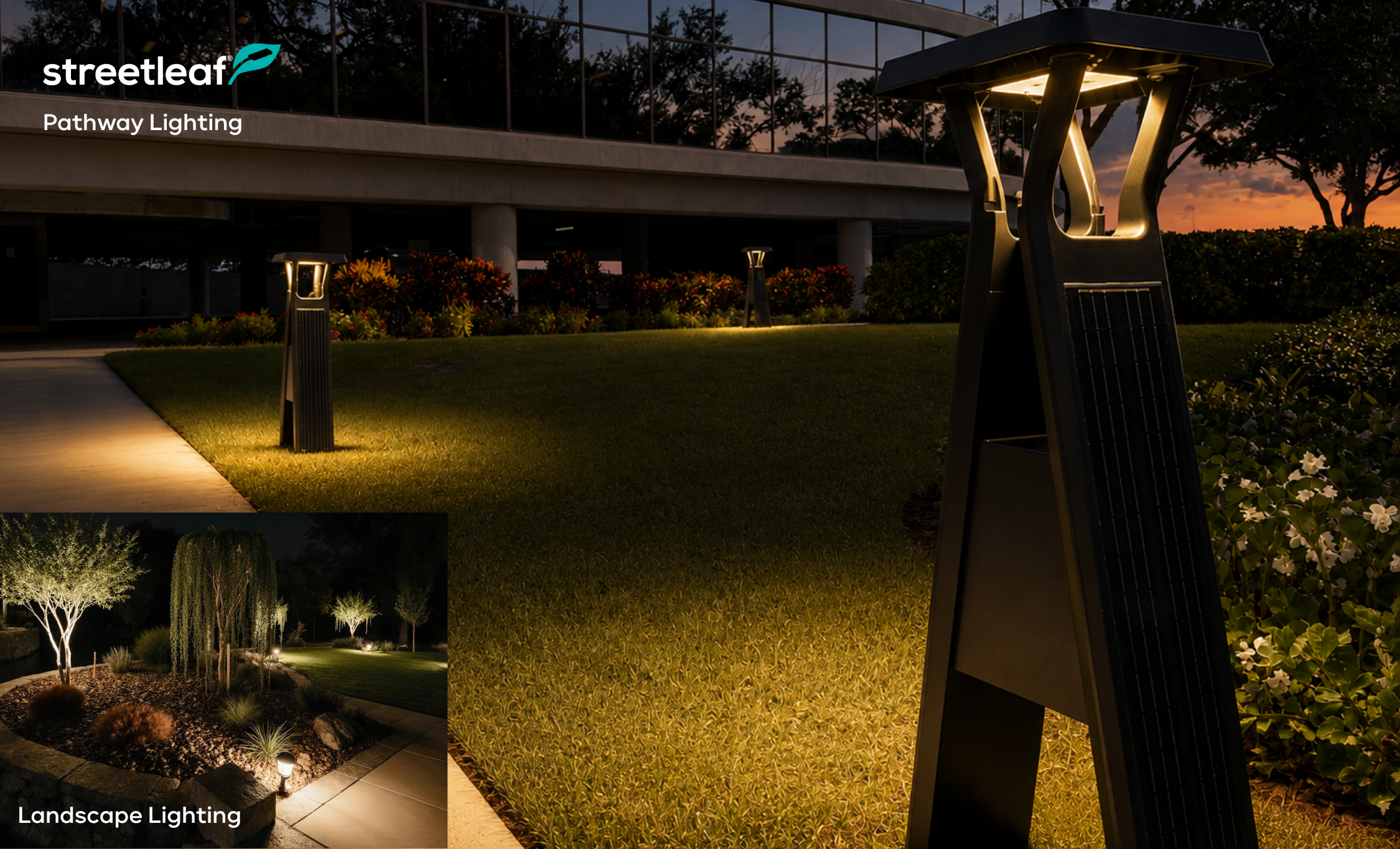
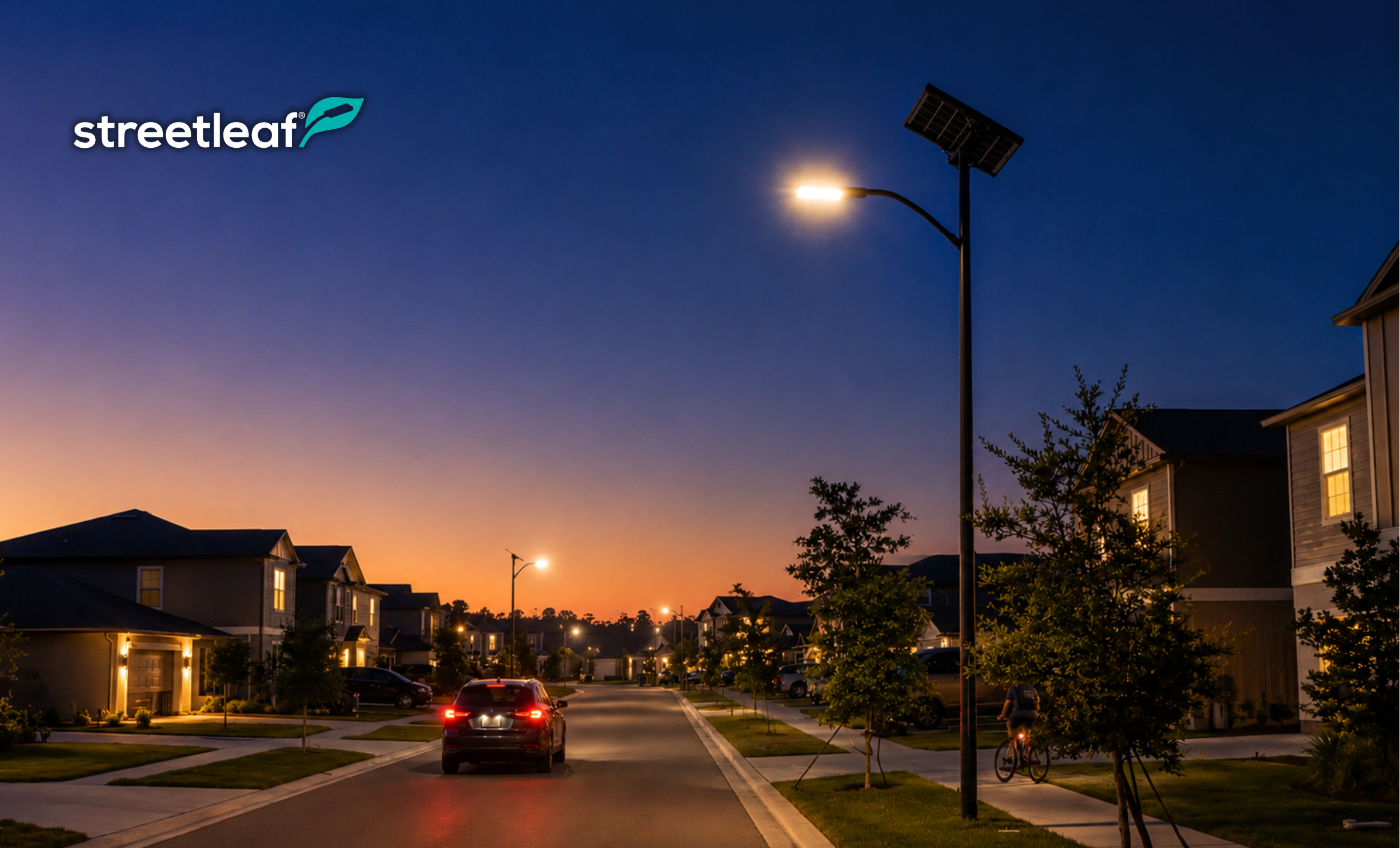

Addressing key engineering, regulatory, and purchasing inquiries for airport operators and municipal contractors.
Commercial-grade airport solar streetlights feature steep panel tilt angles (45° to 60°) optimized for northern latitudes, allowing heavy snow to slide off naturally. Combined with bifacial photovoltaic technology that absorbs ground-reflected light and low-temperature LiFePO4 batteries equipped with internal thermal wrap jackets, systems maintain full 12-hour continuous night operation even during extended cloudy winter spells.
Yes. Top-tier solar manufacturers supply anti-glare anti-reflective coated (ARC) tempered solar glass and sharp-cutoff LED optical reflectors that conform strictly to FAA Advisory Circular AC 150/5345-43 and pass the FAA Solar Glare Hazard Analysis Tool (SGHAT) requirements with zero glare spill into air traffic control towers or landing approaches.
Yes. Leading suppliers like Streetleaf offer turnkey Light-as-a-Service (LaaS) financing models. Under these service agreements, the manufacturer handles 100% of equipment manufacturing, physical installation, remote CMS monitoring, and preventive maintenance for a predictable fixed monthly operational fee—requiring $0 upfront capital expenditure.
High-reliability systems use LiFePO4 battery chemistry rated for over 4,000 deep discharge cycles (approx. 10–12 years of daily life), while monocrystalline solar panels are warrantied for 25 years. Automatic self-cleaning models drastically reduce maintenance intervals to a simple visual inspection every 3 to 5 years.
Equipment qualified for New York coastal facilities undergoes rigorous ASTM B117 salt spray testing (1,000+ hours exposure). Components feature C5-M high-durability fluorocarbon powder coatings, anodized aluminum alloy housings (6063-T6), and 316 stainless steel fasteners to guarantee immunity against salt-fog oxidation.
Due to exposed coastal wind corridors at JFK, LGA, and EWR, structural poles must be engineered to withstand ASCE 7-16 wind load standards. Qualified suppliers provide hot-dip galvanized steel poles certified for structural integrity under Category 5 hurricane conditions (up to 180 mph / 80 m/s wind gusts).
Whether modernizing perimeter security lighting at JFK, expanding long-term parking illumination at LGA, or upgrading regional air cargo aprons across New York State, our engineering team provides complete photometric modeling, FAA glare analysis reports, and customized OEM solutions.