
Explore our top-tier commercial solar luminaires, wind-solar hybrid highway lighting, and smart urban architectural fixtures optimized for UNE-EN 13201 compliance across Spain and Southern Europe.
Spain stands at the absolute epicenter of Europe’s clean energy transition. Guided by the ambitious Plan Nacional Integrado de Energía y Clima (PNIEC 2021-2030) and fueled by allocations from the EU NextGenerationEU Recovery and Resilience Facility (PRTR), Spanish municipalities, regional autonomous governments, and commercial infrastructure developers are undergoing a massive decarbonization shift. A primary focus of this national transition is public outdoor lighting retrofit—replacing aging, high-energy sodium vapor grid infrastructure with autonomous, high-efficiency solar and hybrid lighting arrays.
Deploying solar infrastructure across Spain presents a unique set of geographic and climatic demands. The Iberian Peninsula experiences extraordinary microclimatic variances. Andalusian and Extremaduran territories boast some of Europe's highest Direct Normal Irradiance (DNI) levels exceeding 2,000 kWh/m²/year, subjecting solar components to extreme prolonged thermal stress and UV degradation during summer months (frequently surpassing 45°C ambient temperatures). Conversely, northern Atlantic regions like Galicia, Asturias, and the Basque Country require solar engines engineered for prolonged low-irradiance conditions, heavy rain, and persistent winter cloud cover. Furthermore, coastal zones extending along the 8,000 km Mediterranean and Cantabrian shorelines demand structural resistance against intense salt-spray atmospheric corrosion (C5-M environment class).
To successfully participate in municipal tenders governed by the Instituto para la Diversificación y Ahorro de la Energía (IDAE) and adhere to Spanish Royal Decree RD 1890/2008 (Reglamento de Eficiencia Energética en Instalaciones de Alumbrado Exterior) alongside strict compliance with UNE-EN 13201 road lighting standards, engineering teams must look beyond consumer-grade solar lights. The market demands engineered-to-spec industrial solar infrastructure backed by precise optical modeling, smart MPPT power electronics, extended autonomy battery chemistry, and structural wind resistance calculated to Eurocode 1 (CTE DB SE-AE).
Integrated 99.8% tracking efficiency MPPT algorithms automatically adapt charge voltage profiles to low-light spectral distributions, ensuring maximum battery input during overcast Iberian winter spells.
Hot-dip galvanized steel poles and extruded 6063-T6 aluminum casings treated with fluorocarbon powder coatings withstand marine salt haze along the Costa del Sol and Cantabrian ports.
Industrial grade Lithium Iron Phosphate battery banks incorporating thermal isolation chambers maintain optimal chemical reactivity across extreme range cycles (-20°C to +65°C).
As a premier green infrastructure solar lighting manufacturer supplying Spanish civil engineering firms and municipal contractors, our product architectures are built upon five foundational engineering pillars that solve traditional off-grid solar failures:
1. Bifacial Monocrystalline PV Integration & High-Albedo Harvesting: Traditional solar luminaires utilize monofacial panels that only harvest direct sun overhead. In urban Spanish installations—such as plazas paved with light-colored granite or coastal promenades with white silica sand—our bifacial solar modules utilize ambient back-reflected radiation (albedo boost), boosting energy generation by up to 22%. Combined with Grade-A N-Type monocrystalline cells delivering >23.5% conversion efficiency, energy harvest remains robust even under low-tilt installations necessary for high wind resistance.
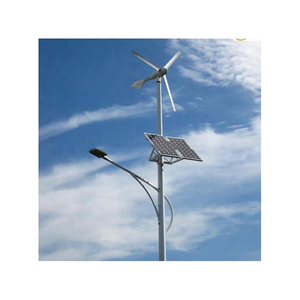
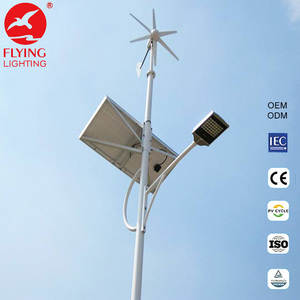
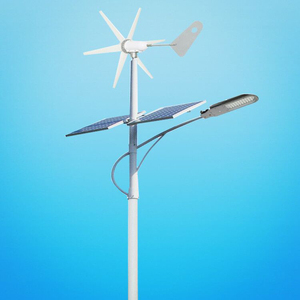
2. Hybrid Wind-Solar Dual Generator Synergies: During severe autumn and winter atmospheric conditions—such as the volatile DANA (Depresión Aislada en Niveles Altos) weather events that bring days of thick cloud cover and high winds to eastern and southern Spain—pure solar systems risk total battery exhaustion. Our hybrid wind-solar streetlamps integrate vertical-axis magnetic levitation wind turbines or horizontal micro-turbines starting at ultra-low wind velocities (2.0 m/s). As solar irradiance drops during stormy weather, kinetic wind power spikes, ensuring continuous 365-night illumination along critical interurban highways and isolated collector roads.
3. Advanced Optical Photometrics & Dark-Sky Compliance (ULOR = 0%): Light pollution control is heavily enforced in regions near Spanish astronomical sanctuaries (such as the Canary Islands under Law 31/1988, as well as protected reserves in Catalonia and Andalusia). Our engineered optical lenses deliver Type II, Type III, and Type IV light distribution profiles designed to meet precise UNE-EN 13201 class requirements (M1 to M5 for vehicular traffic, P1 to P6 for pedestrian zones). Utilizing zero-upward-light optics (ULOR = 0%) and customizable warm CCT options (2200K amber-rich spectrum to 3000K soft white), light is precisely cast on the target pavement without sky glow or glare disruption to local ecosystems.
4. Adaptive Autonomous Dimming & Smart IoT Telemetry: Battery life is preserved using dual-stage dynamic power scheduling. Integrated microwave radar sensors detect approaching vehicles or pedestrians, smoothly ramping output from a 30% baseline energy-saving glow to 100% full illumination in under 0.2 seconds. Furthermore, embedded cellular IoT / LoRaWAN control modules allow municipal public works departments to remotely manage dimming schedules, monitor real-time state of charge (SoC), and receive automated maintenance alerts via centralized smart city management dashboards.
From high-speed transport corridors to sensitive UNESCO historical quarters, examine how specialized solar fixtures solve distinct environmental challenges.
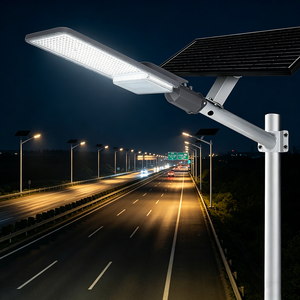
Stretches of non-grid-connected radial highways, industrial zones (*polígonos industriales*), and rural roundabouts across regions like Castilla-La Mancha require high-lumen, continuous operation. Deploying 8-meter to 12-meter dual-arm wind-solar hybrid poles equipped with 3000W MPPT controllers eliminates million-euro grid extension fees while maintaining high luminance levels required for vehicular speed safety under UNE-EN 13201-2 standard.
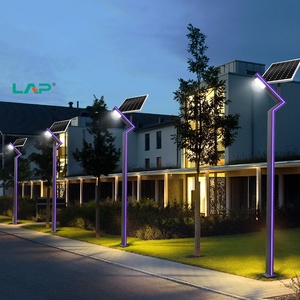
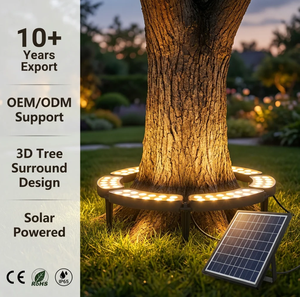
Preserving aesthetic integrity in historic city centers (e.g., Toledo, Seville, Cordoba) and ecological trail networks (*Vías Verdes*) prevents traditional trenching that risks damaging ancient subterranean infrastructure or root systems. Integrated low-CCT solar garden poles and IP67 tree-hugger column lights provide subtle, anti-glare pathway lighting that satisfies municipal historic preservation boards while achieving net-zero operational footprint.
High humidity, heavy salt spray, and seasonal wind gusts make coastal boardwalks along the Balearic Islands and Costa Blanca notoriously harsh on electronic infrastructure. Utilizing IP67 sealed luminaire heads, marine-grade anodized aluminum alloys, and C5-M protective coatings, our solar luminaires resist rust and internal salt fog ingress, delivering decades of maintenance-free operation.
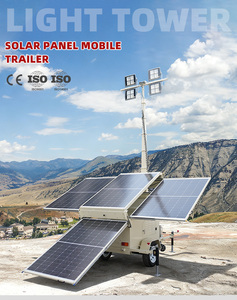
Construction firms executing civil works or emergency response teams facing utility grid failures require immediate, heavy-duty mobile lighting. EU Green Certified hybrid mobile solar light towers featuring heavy-duty battery banks provide zero-emission, silent operation—eliminating diesel generator noise pollution and fuel logistics in densely populated urban centers.
Achieving leadership among international solar lighting manufacturers supplying Spain demands total transparency, rigorous testing methodologies, and uncompromised structural quality control. Our state-of-the-art manufacturing facilities operate in accordance with ISO 9001 (Quality Management System), ISO 14001 (Environmental Management), and ISO 45001 (Occupational Health & Safety) standards.
Every batch of solar lighting engines undergoes exhaustive laboratory validation before shipment to European ports:
By controlling every tier of production—from SMT surface mounting of high-efficacy LED chips (Bridgelux/Lumileds) to custom MPPT firmware development and battery pack assembly—we back our commercial systems with comprehensive 5-to-10 year international warranties and dedicated technical engineering support.
Get authoritative answers to key compliance, technical, and procurement questions regarding solar infrastructure deployment in Spain.
Our luminaires are engineered with high-precision optical lenses that yield tailored light distribution patterns meeting exact UNE-EN 13201 lighting classes (such as M1-M5 for roads and P1-P6 for pedestrian paths). We provide complete IES/LDT photometric files allowing EPC contractors to demonstrate compliance with RD 1890/2008 energy efficiency ratios, minimum light uniformity (U0), and zero upward light output (ULOR = 0%) required by Spanish environmental regulations.
Systems engineered for Northern Spanish deployment (e.g., Galicia, Cantabria) incorporate oversized N-type monocrystalline solar arrays, ultra-high efficacy LEDs (exceeding 210-230 lm/W), and intelligent MPPT controllers with dynamic power-saving dimming. This combination ensures 5 to 7 consecutive days of full-night operational autonomy even under total overcast and rain conditions without auxiliary grid connection.
Extreme summer heat (surpassing 40°C-45°C ambient) can degrade standard lithium batteries. Our solar lighting poles utilize heat-shielded battery enclosures placed lower on the pole structure or underground, combined with premium LiFePO4 chemistry featuring advanced Battery Management Systems (BMS) with thermal cut-offs and wide operating ranges (-20°C to +65°C), ensuring a 10+ year operational lifespan (5,000+ deep cycles at 80% DoD).
Yes. Our hybrid wind-solar streetlights feature low-vibration, high-tensile vertical or horizontal micro wind turbines equipped with automatic aerodynamic breaking systems. Tested against high wind velocity loads under Eurocode standards, these units convert winter stormy winds into electrical power precisely when solar irradiance is lowest, guaranteeing 365-day lighting reliability.
Absolutely. Our MPPT driver systems support wireless communication protocols including NEMA / Zhaga socket integrations, LoRaWAN, NB-IoT, and Zigbee. Municipal operators across Spain can integrate our hardware directly into their centralized public lighting dashboards for remote dimming scheduling, real-time energy monitoring, fault detection, and predictive maintenance management.
We supply a complete tender engineering documentation package, including CE, RoHS, IP67, IK10, and ISO laboratory test certificates, factory warranty guarantees, structural wind load calculations, and tailored DIALux lighting design reports to validate performance metrics required for IDAE and NextGenerationEU subsidies.
Partner with an industry-leading green infrastructure solar lighting manufacturer. Contact our engineering team for photometric simulations, custom OEM/ODM technical specifications, and factory-direct B2B price quotations.
Send an Inquiry