
Factory-direct photovoltaic lighting systems optimized for Argentina's high solar irradiance, extreme wind shear zones, and rugged provincial transport networks.
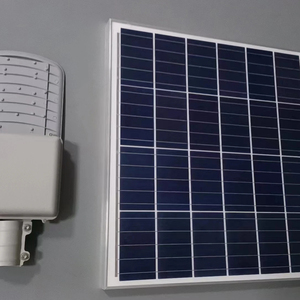
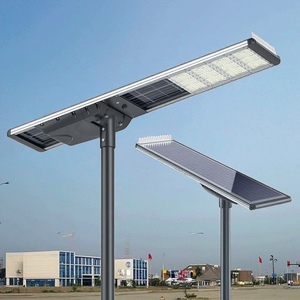
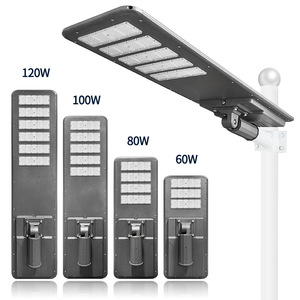
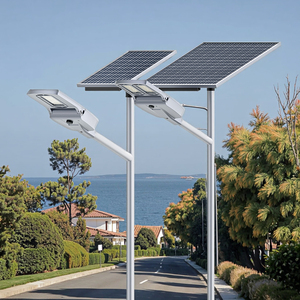
Argentina represents one of Latin America’s most complex yet lucrative markets for solar-powered roadway lighting. Stretching across more than 3,700 kilometers from the tropical high-altitude deserts of Jujuy down to the windswept sub-Antarctic expanses of Tierra del Fuego, the nation's transportation arteries demand lighting solutions capable of performing under intense climatic variation. At the same time, national energy policy reforms, volatile grid tariffs, and economic pressures are fundamentally altering how public and private sectors approach infrastructure procurement.
Municipalities across Gran Buenos Aires, Córdoba, Santa Fe, and Mendoza face double-digit annual increases in grid electricity tariffs (tarifaço) alongside chronic grid stability issues managed by CAMMESA (Compañía Administradora del Mercado Mayorista Eléctrico). Centralized utility lighting overheads have become a significant drain on municipal budgets. Consequently, provincial road authorities (*Vialidad Nacional* and *Vialidad Provincial*) are pivoting toward independent off-grid solar roadway lighting factories to eliminate utility recurring operational costs, bypass expensive copper cable trenching, and mitigate public safety risks caused by localized blackouts.
Furthermore, remote industrial sectors—most notably the **Vaca Muerta shale gas formation in Neuquén** and the **Lithium Triangle mining corridors in Salta, Jujuy, and Catamarca**—require rapid-deployment lighting infrastructure. Traditional grid expansion into these vast, isolated tracts can cost upwards of $25,000 to $40,000 USD per kilometer due to heavy civil works, transformer installations, and vulnerable copper line infrastructure. Factory-direct, autonomous solar roadway luminaires eliminate these upfront capital barriers, enabling project developers to establish illuminated transport corridors in days rather than months.
Off-the-shelf solar lights fail in Argentina due to uncalculated climatic extremes. We engineer customized thermal, optical, and structural configurations optimized for local geographies.
The Northern Puna region receives world-class solar irradiance (>2,300 kWh/m²/year) but presents severe challenges: intense ultraviolet radiation, extreme day-to-night temperature fluctuations (+35°C to -10°C), and high dust accumulation. We supply robotic self-cleaning solar streetlights equipped with UV-stabilized polycarbonate lenses, heavy-anodized heat sinks, and anti-dust nano-coatings that preserve 98% solar conversion efficiency without manual intervention.
The foothills of the Andes experience the infamous Viento Zonda—a warm, dry wind with sudden localized gusts exceeding 160–180 km/h. Standard solar brackets quickly fail under torsional wind fatigue. Our Zonda-resilient luminaires feature Class-C structural steel poles, reinforced die-cast aluminum brackets, and low-profile aerodynamics certified through finite element stress testing to withstand severe wind forces effortlessly.
Accounting for over 60% of Argentina's traffic volume, the Pampas region demands robust moisture protection against dense coastal fogs, torrential summer rains, and urban particulate soot. We supply IP66/IP67 sealed luminaire housings with Type II-M and Type III-M optical distributions engineered to illuminate wide multi-lane highways (such as Ruta Nacional 9 and Avenida General Paz) according to IRAM safety guidelines.
Patagonian winters bring prolonged dark hours, low sun elevation, snow cover, and sub-zero temperatures down to -20°C that paralyze conventional lithium-ion batteries. Our Patagonian spec units integrate smart low-voltage heating elements within the BMS (Battery Management System) and high-density LiFePO4 cells, maintaining optimal charge acceptance and guaranteed 365-night continuous operation.
As a global Tier-1 solar roadway lighting manufacturer backed by over 15 years of solid-state lighting and photovoltaic research, our engineering capabilities bridge the gap between initial capital efficiency and multi-decade field reliability. When sourcing solar infrastructure for Argentine public bids or private mining access roads, structural integrity and optical precision are non-negotiable.
We combine Bridgelux and Philips Lumileds 5050 LED arrays yielding up to 210 lumens per watt at system level with intelligent Maximum Power Point Tracking (MPPT) charge controllers operating at 99.2% efficiency. This enables our fixtures to deliver equivalent lux levels to 250W–400W legacy High-Pressure Sodium (HPS) lamps while requiring 60% less photovoltaic panel wattage.
Unlike suppliers using reclaimed 18650 lithium-ion cells, our factory exclusively builds battery packs using brand-new Lithium Iron Phosphate (LiFePO4) cells rated for 6,000+ charge cycles at 80% Depth of Discharge (DoD). Combined with our patented ALS (Adaptive Lighting System) intelligence, our luminaires guarantee 5 to 7 consecutive rainy or overcast days of autonomy, protecting road networks during severe Argentine winter storms.
For high-latitude southern provinces, our flagship models utilize glass-glass bifacial monocrystalline solar panels. By capturing both direct overhead sun rays and reflected light (albedo) from surrounding road surfaces, light-colored gravel, or snow cover, energy generation increases by an additional 18% to 25%, drastically shortening battery recovery time.
Modern Argentine municipalities are migrating toward Smart City central management systems (CMS). Our intelligent split and integrated solar streetlights can be equipped with integrated wireless node controllers (LoRaWAN, NB-IoT, or 4G GSM). Municipal lighting managers can monitor battery state-of-charge, dim fixtures during low-traffic hours, receive automated fault alerts, and measure real-time carbon offsets from a centralized dashboard.
Get complete photometric DIALux simulations, technical datasheets, and direct factory wholesale pricing tailored to your project requirements.
Send an InquiryDetailed technical answers addressing import regulations, compliance standards, environmental durability, and operational ROI for local contractors.
Our complete line of solar roadway lights is certified under international standards including ISO9001, CE, RoHS, IP66, and IK10. For Argentine municipal projects, our optics and photometrics strictly align with IRAM-AADL J 2022-1 guidelines for urban public lighting and highway luminance profiles. Because our off-grid solar systems operate under Extra-Low Safety Voltage (12V/24V DC), they eliminate high-voltage hazards, simplifying compliance approvals with local electric power distribution utilities and provincial regulators.
We work directly with established Argentine customs brokers, freight forwarders, and import partners experienced in handling Sistema de Importaciones de la República Argentina (SEDI/SIRA) declarations. We provide complete documentation including detailed commercial invoices, certificates of origin (Form A/CO), HS tariff codes (typically under Chapter 9405.40 for LED luminaires and 8541.40 for PV panels), and precise packing lists to prevent clearance delays at the Port of Buenos Aires or inland logistics hubs.
Legacy Gel or AGM lead-acid batteries fail within 1.5 to 2 years in South America due to high heat degradation and limited cycle life (approx. 500-800 cycles at 50% DoD). Furthermore, lead-acid batteries buried underground are frequently target of wire and metal theft along public highways like Ruta Nacional 40. Our factory utilizes pole-mounted or luminaire-integrated Grade-A LiFePO4 cells offering 3,000 to 6,000+ deep cycles (10+ year lifespan). LiFePO4 operates safely between -20°C and +65°C without thermal runaway and charges up to 4 times faster under partial sun conditions.
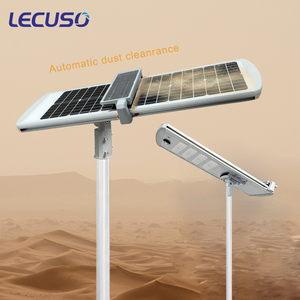
In dust-heavy corridors like the agricultural Pampas during harvest season or the high-altitude lithium mining access tracks in Salta and Jujuy, airborne particulate accumulation can reduce solar panel output by 30% to 50% in weeks. Our patented self-cleaning solar streetlights feature a built-in heavy-duty wiper brush driven by an automated micro-motor. Programmed to clean the solar module twice daily, the system keeps the panel face clear of dust, bird droppings, and frost, guaranteeing maximum energy capture without incurring manual maintenance labor costs.
The Viento Zonda creates sudden, high-velocity wind loads that place severe strain on lighting brackets. Our luminaires engineered for Cuyo provinces feature high-tensile die-cast ADC12 aluminum housings, stainless steel 304 anti-vibration hardware, and low EPA (Effective Projected Area) profiles. Brackets are FEA-tested to sustain wind speeds up to 180 km/h (equivalent to Class-C hurricane force winds), keeping the panel assembly structurally rigid and optically stable.
Copper wire theft is a major operational headache for road operators across Argentina. Traditional AC grid lighting requires kilometers of buried copper cables between poles, which thieves frequently strip, causing extended blackouts and multi-million-peso repair bills. Off-grid solar streetlights operate completely standalone: each pole generates, stores, and consumes its own energy internally. With zero interconnecting ground copper wiring, copper theft is 100% eliminated.
While solar luminaires carry a slightly higher initial equipment cost than bare AC LED fixtures, their total installed cost is typically 30% to 50% lower because civil works (trenching, conduit laying, electrical substations, and grid connection fees) are eliminated. When factoring in zero monthly electricity bills and immunity to tariff hikes, the typical payback period for Argentine commercial developers and municipalities ranges between 18 and 36 months, after which the system generates pure operational savings for over a decade.
Whether you are tendering for municipal road retrofits in Buenos Aires, highway expansions in Cordoba, or private mining transport logistics in the Andes, our engineering team is ready to deliver tailored solutions.
Send an Inquiry