
High-performance solar lighting systems designed for Moscow's rigorous winter climate, offering 100% off-grid reliability, GOST compliance, and sub-zero LiFePO4 battery heating protection.
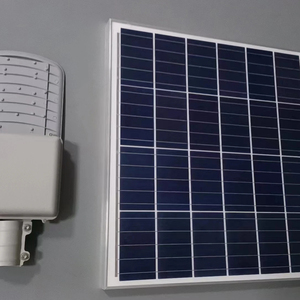
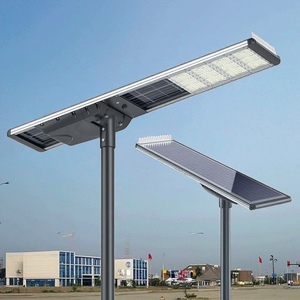
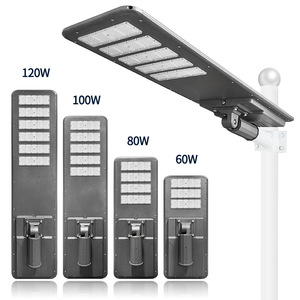
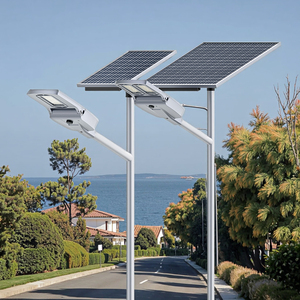
An engineering analysis of photovoltaic performance, severe northern winter thermodynamics, and OEM procurement strategies for municipal and private developers in the Central Federal District.
Deploying outdoor solar street lamps in Moscow presents distinct geographic and atmospheric realities. Situated at 55.75° N, Moscow experiences extreme seasonal solar irradiance variance. While summer months offer up to 17.5 daylight hours, winter solstice drops daylight down to barely 7 hours, frequently accompanied by heavy overcast sky conditions and low solar elevation angles (under 11° above the horizon in December).
Standard solar streetlights engineered for tropical or Mediterranean regions rapidly fail in Moscow due to insufficient diffuse irradiance harvesting and immediate battery depletion. Direct factory manufacturing must incorporate three technical baseline adaptations:
The single greatest failure point of cheap, uncertified solar streetlights in Northern Eurasia is chemical battery degradation under freezing conditions. Standard Lithium Iron Phosphate ($LiFePO_4$) batteries cannot safely accept a charge when internal temperatures drop below 0°C. Attempting to charge standard lithium cells at -20°C results in lithium dendrite formation, severe capacity loss, and sudden battery short-circuiting.
Tier-1 urban solar lighting factories supplying the Moscow market integrate advanced thermal enclosure technologies:
Uninsulated battery boxes mounted directly behind solar panels experience full thermal dissipation. Battery shuts down permanently at -10°C, leading to total blackout by early November.
Vacuum-sealed insulation coupled with intelligent micro-heating pads. Solar energy first warms the battery to +5°C before initiating the charge cycle, ensuring 2,000+ cycle lifespan down to -40°C.
Key functional pillars integrated into our OEM/ODM solar luminaires for seamless municipal installation.
Self-heating thermal wraps and aerogel insulation protect $LiFePO_4$ cells down to -40°C, maintaining uninterrupted battery storage throughout winter night cycles.
Utilizing premium Lumileds / Cree LED chips reaching up to 210 lm/W. Customized optical Type II/III beam distributions focus light strictly on target pavements.
Die-cast ADC12 aluminum housings finished with anti-corrosion fluorocarbon powder coating withstand heavy road-salting spray, snow blasts, and IK10 impacts.
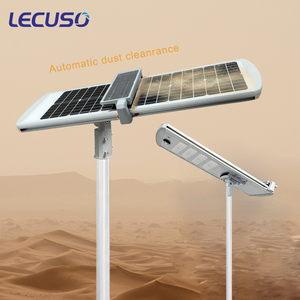
Optional integrated robotic cleaning brushes automatically sweep away heavy dust, bird drop, and wet snow daily, keeping solar absorption at peak 98% efficiency.
Integrated NB-IoT / LoRaWAN control modules enable municipal central management software (CMS) to monitor voltage, dimming curves, and fault alerts remotely.
Eliminates asphalt destruction, cable laying, electrical permitting, and ongoing utility electric bills. 100% powered by clean renewable solar energy.
How specialized OEM solar lighting factory solutions solve complex infrastructure demands across urban, industrial, and suburban zones.
Rapid residential housing construction across Novaya Moskva demands swift lighting installation along new access roads and public courtyards. Off-grid solar street lamps eliminate 6+ month utility grid connection delays, letting property developers hand over illuminated communities on tight deadlines.
Massive logistics hubs, warehousing complexes, and truck parking lots along the Moscow Ring Road (MKAD) require continuous 12-hour high-lux security lighting. High-wattage split-type solar street lights provide reliable perimeter safety with zero electricity expenditure.
High-tech industrial zones such as Zelenograd Innovation Hub require eco-friendly, carbon-neutral lighting options aligned with ESG goals. Integrated solar street lamps demonstrate environmental leadership while lowering facility overhead costs.
Suburban settlements across the Moscow Oblast frequently suffer from unstable seasonal power grids. Solar street luminaires with smart motion sensors guarantee uninterrupted lighting along residential streets during winter power surges.
Understanding the shift in commercial specifications and municipal tenders across the Russian Federation.
Procurement guidelines increasingly penalize outdated Poly or Mono-PERC modules. B2B buyers now mandate N-Type TOPCon bifacial panels due to their superior performance in low ambient light and lower power temperature coefficient.
Moscow urban aesthetic codes demand zero sky-glow and controlled light trespass. Full-cutoff light distributions and warm color temperatures (3000K-4000K) are replacing harsh blue-spectrum fixtures in residential zones.
Standalone unmonitored solar lights are being phased out in public infrastructure projects. Integration with municipal central control management systems via cellular IoT allows city engineers to dim lamps remotely and detect component degradation instantly.
Essential engineering, logistics, and operational answers for municipal contractors and B2B importers.
Our solar street lights incorporate an intelligent battery thermal management system (BTMS). High-density $LiFePO_4$ battery packs are insulated inside vacuum aerogel chambers with built-in low-power heating films. When solar energy is captured during cold daylight hours, the controller first directs energy to warm the battery core above +2°C before initiating charging. This completely eliminates cold-charging degradation.
We address snow coverage through three design measures: First, panels are installed at an aggressive tilt angle (45°-60°), allowing dry snow to slide off under gravity. Second, glass surfaces receive a hydrophobic coating that prevents wet snow from adhering. Third, for high-snowfall areas, we provide auto-cleaning models equipped with heavy-duty robotic wiper blades that clear snow daily.
Yes. Our manufacturing facility produces luminaires engineered to comply with Russian Federation safety, electromagnetic compatibility (EMC), and environmental protection standards (GOST-R, CE, RoHS, IP66, IK10). Technical documentation, photometric IES files, and test certificates are provided for municipal approval.
Standard factory production takes 15-20 days depending on project customization. Shipping to Moscow is typically conducted via direct rail freight (China-Europe / Yiwu-Moscow / Shenzhen-Moscow line) taking approximately 14-18 days, or sea-rail multimodal transport. We provide complete DDP or FOB supply chain support.
Standard engineering configurations provide 5 to 7 consecutive days of battery autonomy under full cloud cover or heavy snowfall. Microcontroller dimming profiles (e.g., 100% brightness during peak evening traffic, dimming to 30% with PIR motion boost at midnight) ensure critical battery reserve preservation.
Yes. As a direct manufacturing enterprise, we offer comprehensive OEM/ODM services including laser-engraved corporate logos, customized body colors, custom lens optics, and full DIALux photometric simulations to verify lux levels and pole spacing before procurement.
Direct factory sourcing guarantees rigorous quality control, competitive pricing, and tailored engineering solutions for high-latitude infrastructure.
From die-casting aluminum light heads and SMT LED surface mounting to battery pack assembly and automated aging tests, every manufacturing step is conducted under ISO9001 standards.
We engineer customized light distribution curves specifically for wide Russian road layouts (GOST R 55706 standard), maximizing pole distance and minimizing hardware costs per kilometer.
We assist regional distributors, engineering contractors, and municipal partners with detailed bid documentation, customized sample testing, and guaranteed 5-year factory warranties.
Planning an urban, commercial, or industrial lighting project in Moscow or the Central Federal District? Connect with our engineering team today for technical consultation, product specifications, and direct wholesale pricing.