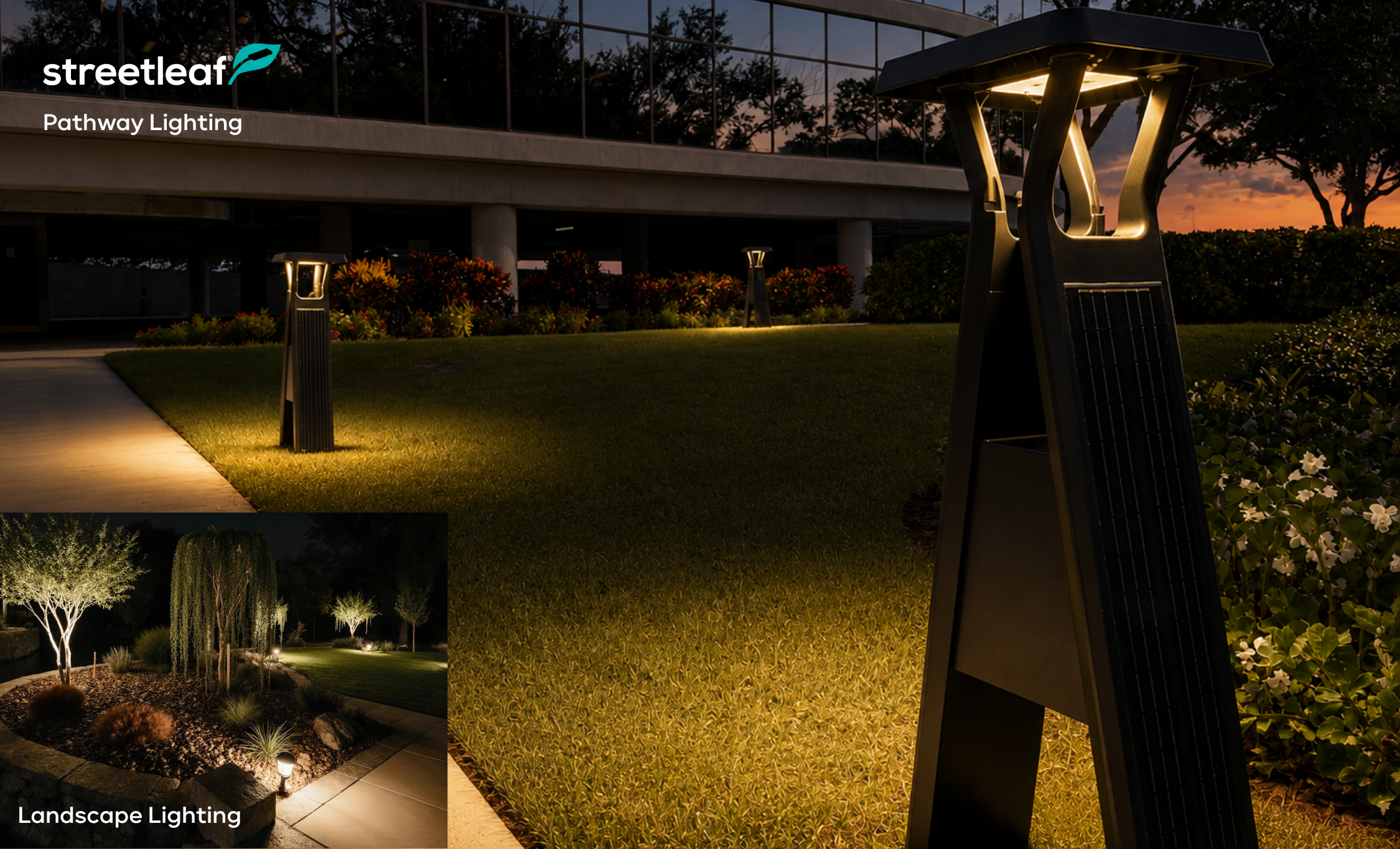
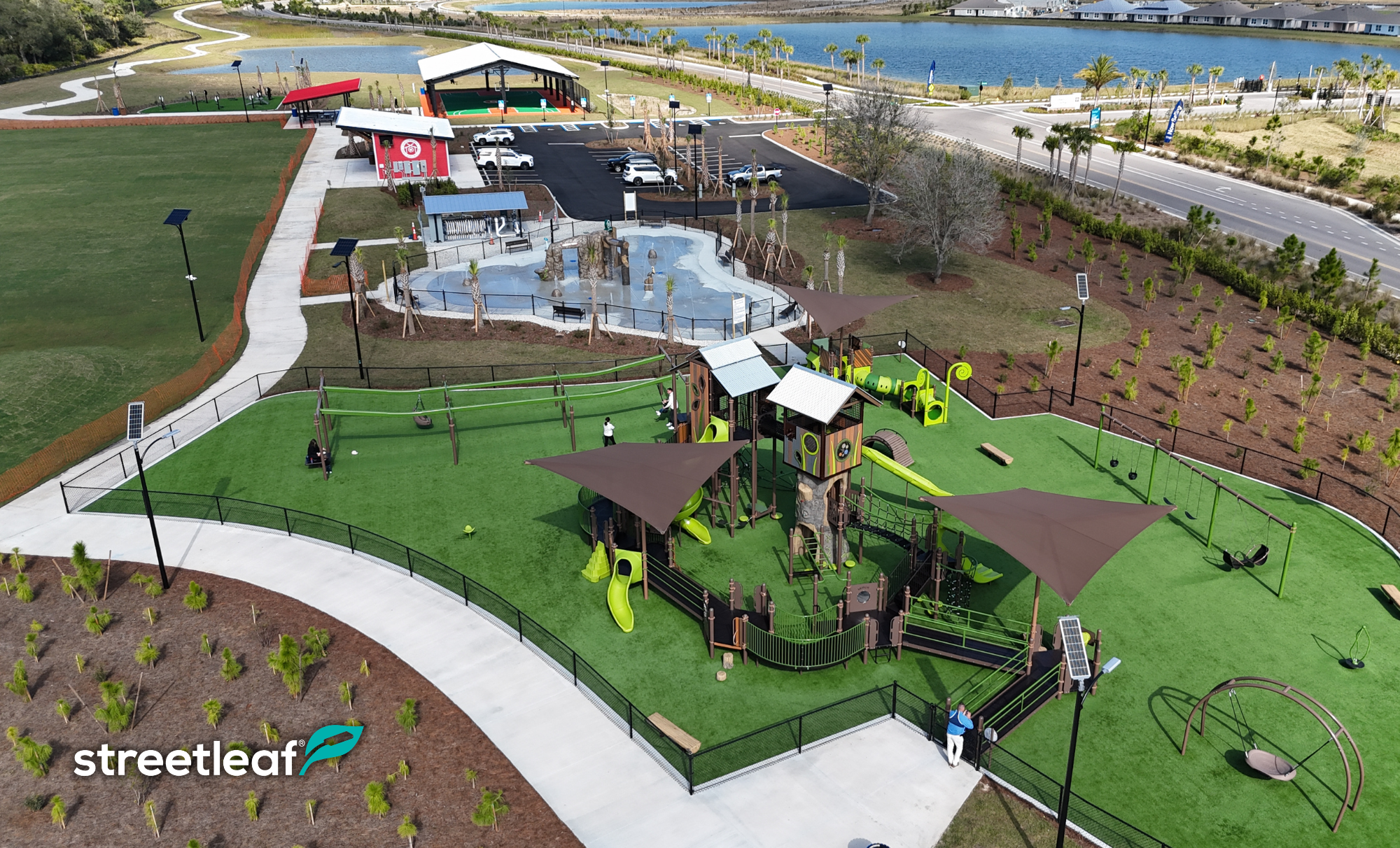
An authoritative technical evaluation for procurement managers, civil engineers, utilities, and land developers. Explore storm-resilient off-grid solar architectures, total cost of ownership models, and zero-CapEx deployment frameworks.
Global infrastructure procurement for outdoor illumination is undergoing a structural pivot toward Renewable Outdoor Lighting systems. Driven by compounding grid expansion costs, heightened extreme weather vulnerabilities, and stringent municipal carbon-neutrality mandates, commercial land developers, Homeowners Associations (HOAs), and public utilities are abandoning legacy grid-tied fixtures in favor of autonomous off-grid solar streetlight architectures.
Traditional utility-tied outdoor lighting requires extensive capital outlay: sub-surface trenching, conduit laying, high-voltage transformer drops, panel upgrades, and multi-agency permitting. In contrast, engineered renewable outdoor luminaires operate on zero-grid infrastructure. By combining high-efficiency bifacial solar modules, lithium iron phosphate (LiFePO4) energy storage, and Maximum Power Point Tracking (MPPT) energy management, modern off-grid systems yield immediate financial payback while guaranteeing multi-day operational autonomy.
This technical white paper serves as a comprehensive procurement framework for commercial decision-makers, evaluating system efficiency metrics, thermal battery dynamics, structural wind load standards, and capital expenditure options.
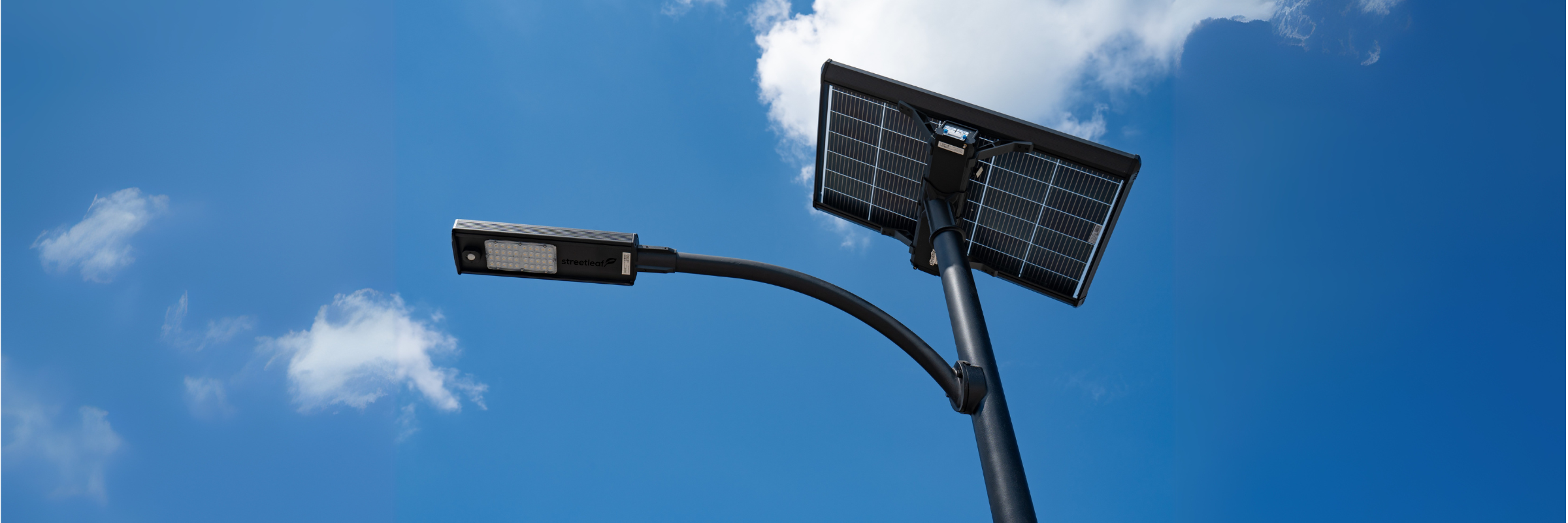
To meet enterprise reliability benchmarks—specifically maintaining uninterrupted illumination across consecutive overcast days and catastrophic weather events—renewable outdoor lighting systems require specialized system engineering. The core functional subsystems include:
Unlike monolithic single-sided PV modules, bifacial solar panels capture direct sunlight on the primary surface while harvesting indirect albedo light reflected from asphalt, concrete, and surrounding terrain on the rear side. This increases cumulative daily energy yield by 18% to 30%, guaranteeing rapid battery charge cycles even during winter solstice solar zenith angles.
Modern commercial renewable outdoor lighting relies exclusively on grade-A Lithium Iron Phosphate (LiFePO4) chemistries. Offering over 3,500 continuous cycles at 80% Depth of Discharge (DOD), LiFePO4 provides superior thermal runaway threshold protection (up to 60°C operational capacity) compared to legacy NCM or lead-acid batteries, ensuring a 10-year maintenance-free operating lifecycle.
Microprocessor-controlled Maximum Power Point Tracking (MPPT) charge controllers dynamically scan voltage-current curves 100 times per second to optimize solar conversion efficiency up to 98.5%. Integrated firmware utilizes adaptive power curve regulation, automatically dimming optical output during low-battery states to preserve essential emergency security lighting.
Selecting the optimal fixture architecture depends on road classification, mounting height, target foot-candle uniformity, and localized wind-load parameters. Below are Streetleaf’s flagship enterprise-grade product lines engineered for severe-environment applications.
| Technical Parameter | Streetleaf AVE Series | Streetleaf EcoPath Series | Streetleaf Horizon Municipal |
|---|---|---|---|
| System Luminous Flux | 6,000 lm – 12,000 lm | 2,500 lm – 5,000 lm | 12,000 lm – 24,000 lm |
| Solar Module Technology | N-Type Bifacial TOPCon (22.8% Eff) | Monocrystalline Integrated Shingle | High-Output Split Bifacial PV |
| Battery Chemistry & Capacity | LiFePO4 (3.2V / 120Ah to 200Ah) | LiFePO4 (3.2V / 60Ah to 100Ah) | Industrial Grade LiFePO4 (12.8V / 150Ah) |
| Battery Lifespan / DOD | >3,500 cycles @ 80% DOD (10+ yrs) | >3,500 cycles @ 80% DOD (10+ yrs) | >4,000 cycles @ 80% DOD (12+ yrs) |
| Autonomy Period (No Sun) | 5 to 7 Days Continuous | 5 Days Continuous | 7 Days Continuous |
| Wind Load Resistance | AASHTO 165 MPH (Cat 5) | AASHTO 150 MPH | AASHTO 170 MPH (Cat 5 Severe) |
| Color Temperature (CCT) | 3000K, 4000K, 5000K | 2200K (Amber), 2700K, 3000K | 4000K, 5000K |
| Environmental Protection | IP66 Enclosure / IK10 Impact | IP66 Enclosure / IK09 Impact | IP67 Sealed / IK10 Impact |
As corporate entities and governmental agencies align procurement directives with international climate frameworks, several macro trends are defining the commercial renewable lighting sector:
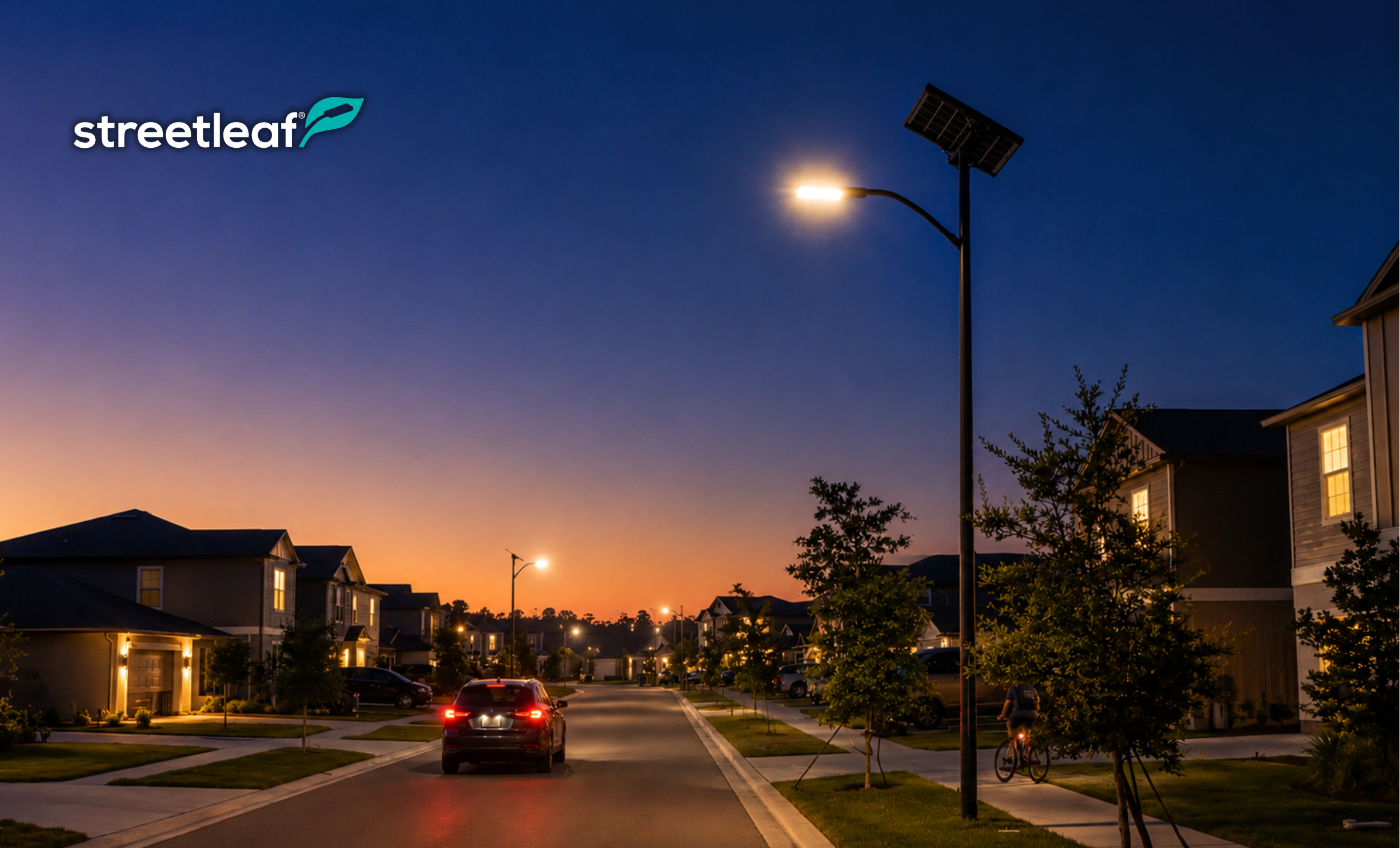
High upfront capital costs historically hindered rapid municipal lighting conversion. Today, enterprise procurement is dominated by utility service agreements ($0 upfront cost models). Companies like Streetleaf finance, install, remotely monitor, and maintain solar streetlight networks for a fixed, predictable monthly operational expenditure (OpEx), instantly yielding positive cash flow compared to traditional utility bills.
Real estate developers and municipal entities are required to disclose indirect operational emissions. Switching 100 streetlights to off-grid solar eliminates approximately 45 metric tons of CO2 annually. This directly advances corporate ESG reporting goals while insulating organizations from rising grid electricity tariffs.
Extreme weather events, extreme heatwaves, and winter storm surges continue to stress centralized electricity grids. Grid-dependent streetlights routinely fail during power outages, compromising public safety. Off-grid renewable outdoor lighting creates autonomous municipal safety islands, ensuring roads, emergency access lanes, and critical infrastructure remain brightly lit regardless of grid stability.
Rapid advances in semiconductor physics, IoT telemetry, and material science are pushing the capabilities of renewable outdoor illumination to unprecedented levels:
Emerging commercial solar modules utilizing perovskite-on-silicon tandem cells are breaking theoretical silicon efficiency limits, achieving energy conversion efficiencies above 28%. This allows smaller solar panel footprints to produce higher total wattage, significantly reducing wind drag on light poles.
Next-generation MPPT controllers incorporate Machine Learning algorithms that analyze historical weather data and localized satellite forecasts. The controller automatically adjusts LED dimming schedules up to 48 hours in advance of prolonged storm fronts to preserve maximum battery reserve.
Each luminaire acts as a node within a self-healing wireless mesh network (LoRaWAN/NB-IoT). Municipal fleet managers can remotely audit battery state-of-health, track solar input, detect ambient temperature anomalies, and receive real-time automated fault alerts from a central cloud dashboard.
Below are authoritative responses to the most critical technical and economic queries submitted by commercial buyers, civil engineers, and procurement committees.
Answer: Streetleaf renewable outdoor lighting systems are engineered with a minimum 5-to-7 day operational autonomy ratio. Through high-capacity LiFePO4 energy storage, high-efficiency bifacial solar panels that capture diffuse skylight, and dynamic MPPT dimming protocols, the lights remain fully operational even through consecutive rain, snow, or heavy overcast conditions without experiencing complete battery depletion.
Answer: While legacy grid-tied LED fixtures may have lower initial luminaire hardware costs, their total installed cost is dramatically higher due to civil works: trenching costs ($40 to $120 per linear foot), underground conduit, wiring, junction boxes, transformer connections, and monthly utility electric bills. Standalone solar streetlights eliminate 100% of trenching and electrical infrastructure costs. In typical commercial developments, off-grid solar yields an immediate 20% to 45% capital savings at installation and zero recurring electrical utility expenses.
Answer: Streetleaf systems are engineered to structural AASHTO standards, rated to withstand Category 5 hurricane wind forces (up to 165 MPH sustained winds). Luminaire housings feature die-cast aluminum alloys with marine-grade anti-corrosion coatings, IP66/IP67 ingress protection against water immersion, and IK10 impact-resistant tempered glass optics.
Answer: Yes. Streetleaf offers specialized optics that comply with International Dark-Sky Association (IDA) guidelines to prevent light trespass and skyglow. For coastal developments, HOAs, and ecologically sensitive zones, we supply 2200K turtle-friendly narrow-spectrum amber LEDs that do not disrupt sea turtle hatchlings or nocturnal wildlife patterns.
Answer: Under our Service Agreement option, Streetleaf provides the complete solar lighting hardware, engineering designs, delivery, remote monitoring, and ongoing maintenance with zero upfront capital expenditure (CapEx). Developers or municipalities pay a fixed, low monthly service fee, eliminating balance sheet debt and offloading all long-term maintenance responsibilities onto our technical service team.
Answer: The bifacial photovoltaic panels feature a design lifecycle of 25 to 30 years with less than 0.5% annual degradation. Our Grade-A LiFePO4 battery cells deliver over 3,500 complete discharge cycles (approx. 10 to 12 years of continuous daily operation) before reaching 80% original capacity, at which point modular battery packs can be swiftly swapped out in the field without replacing the pole or fixture head.
With over 1,269+ high-performance solar streetlights actively operating across challenging environmental corridors, Streetleaf has established itself as an authoritative leader in commercial off-grid outdoor lighting.

Request our comprehensive enterprise product catalog, photometrics library (IES files), and technical specification sheets. Speak directly with our senior application engineers today.
Get Catalog