Enterprise Procurement & Infrastructure Guide

Commercial & Municipal Solar Lighting Service: The Strategic B2B Guide to Zero-CapEx Off-Grid Resilience

An in-depth analysis of next-generation Solar Lighting Service models, hurricane-resilient engineering standards, bifacial solar harvest economics, and turnkey deployment strategies for global buyers, real estate developers, HOAs, and municipal utilities.

1,269+ Lights Deployed
Cat 5 Hurricane Rated
100% Off-Grid Solar
5+ Days Battery Backup
$0 Upfront CapEx Service

Redefining Outdoor Lighting Infrastructure: The Turnkey Solar Lighting Service Model

For decades, municipal procurement directors, commercial land developers, Homeowners Associations (HOAs), and electric utility executives faced an expensive ultimatum when illuminating roadways, pathways, and commercial parcels: invest hundreds of thousands of dollars in traditional grid-tied AC infrastructure, or leave vast perimeter stretches unlit. Traditional grid-tied street lighting demands deep earth trenching, extensive electrical copper conduit placement, transformer station step-down units, complex municipal permitting, and ongoing vulnerability to grid power outages.

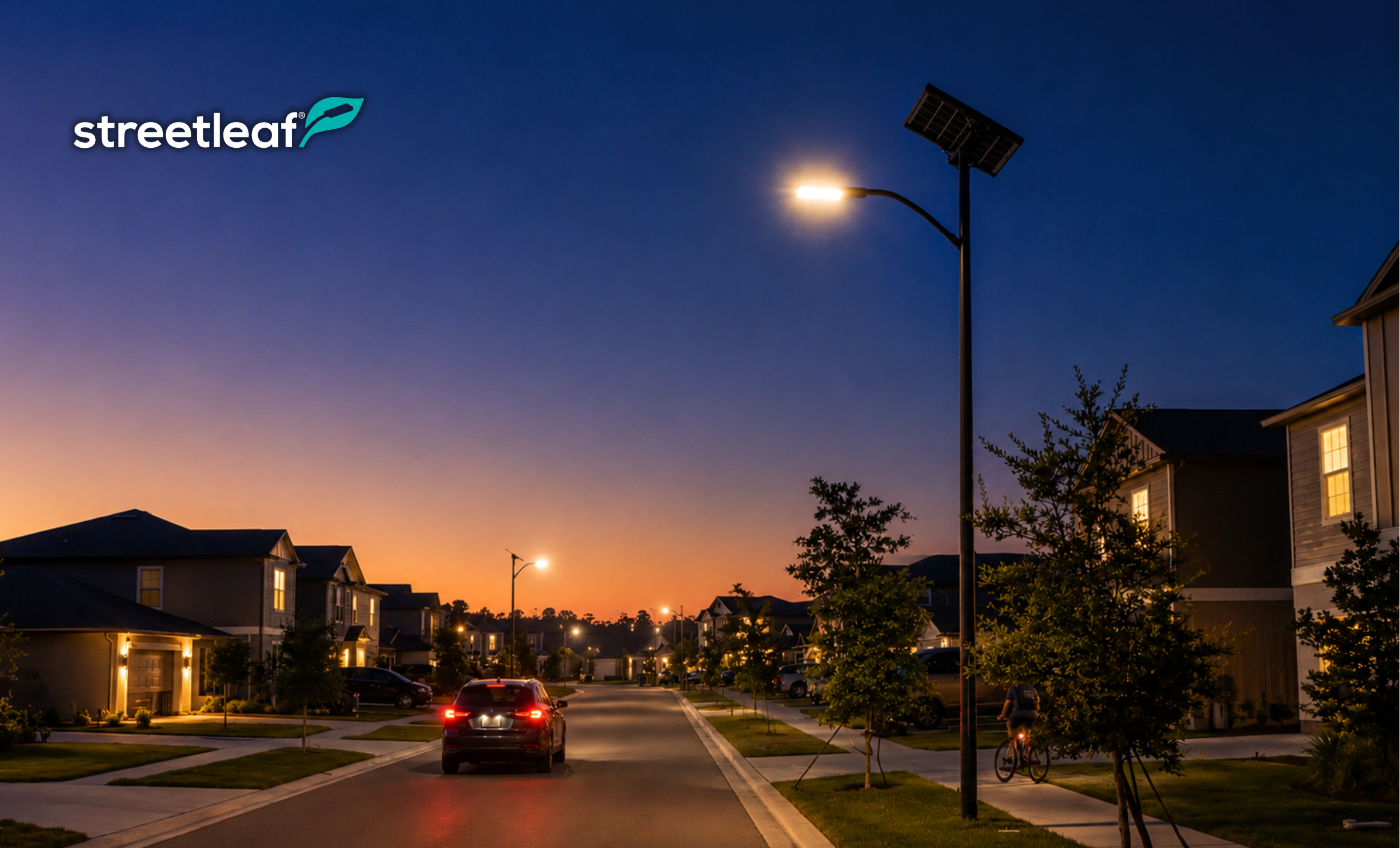
Today, global procurement behavior has fundamentally shifted. Driven by extreme weather events, accelerating grid instability, rising electricity tariffs, and stringent municipal ESG (Environmental, Social, and Governance) mandates, decision-makers are bypassing grid extensions entirely. Instead, they are leveraging an all-inclusive Solar Lighting Service (also widely structured as Lighting-as-a-Service or LaaS). A modern commercial Solar Lighting Service integrates professional photometric site auditing, hurricane-engineered hardware manufacturing, continuous IoT telemetry monitoring, and proactive lifetime asset maintenance into a single, seamless service framework.

This operational model decouples public safety illumination from utility grid dependencies. By deploying stand-alone, 100% off-grid photovoltaic streetlights, commercial entities and public sector organizations eliminate utility interconnection delays—which frequently stall real estate development projects by 6 to 18 months—while securing guaranteed 365-night illumination regardless of local utility outages.

SEO & Procurement Key Insight: Traditional grid-tied streetlight installation costs in North America and Europe average $4,000 to $8,000 per pole when accounting for trenching, utility connection, and labor. A turnkey Solar Lighting Service eliminates 100% of civil trenching expenses while delivering zero-grid-dependency operation with guaranteed storm resilience.

Recommended Solar Lighting Service Hardware Systems

Streetleaf provides specialized, commercial-grade solar luminaire architectures engineered specifically to meet stringent IESNA (Illuminating Engineering Society of North America) lighting distribution standards across residential, municipal, and commercial applications.

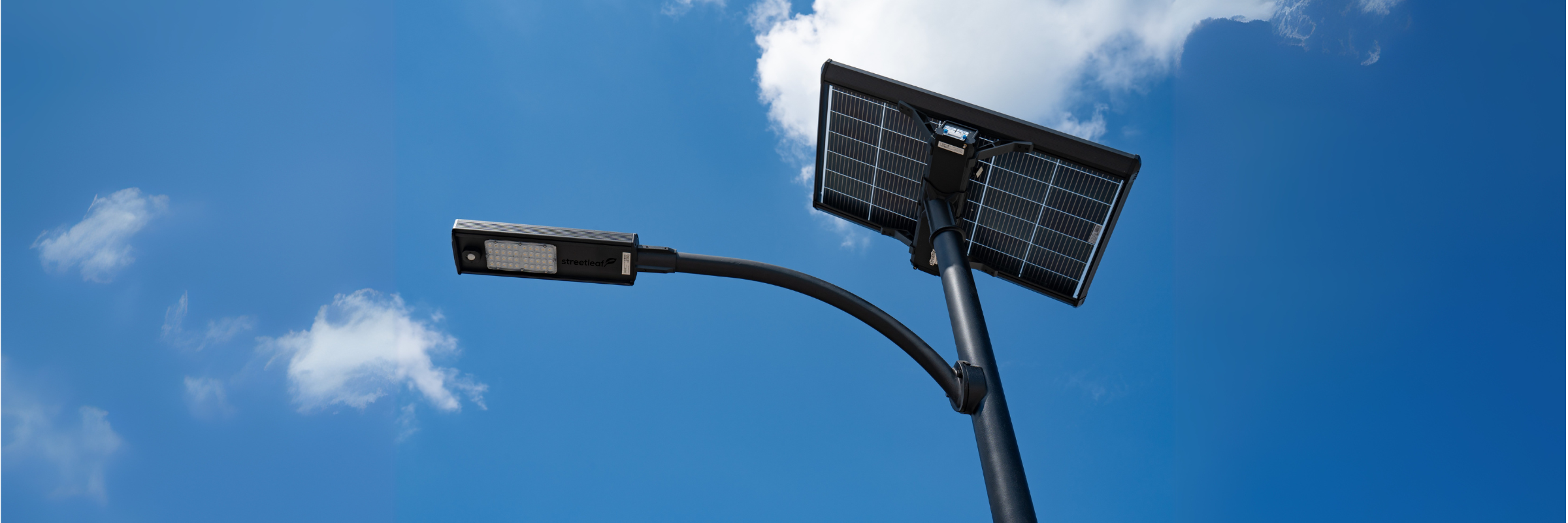
Streetleaf AVE Series Commercial Solar Streetlight with Bifacial Solar Panel

Streetleaf AVE Heavy-Duty Series

Best For: Municipal Collector Roads, Arterial Thoroughfares & Highways

  • Solar Module: High-efficiency Vertical / Tilt Bifacial Monocrystalline Array
  • Luminous Efficacy: Up to 210 lm/W with precision IESNA Type II/III optics
  • Battery Chemistry: Thermal-managed LiFePO4 (4,000+ cycle life)
  • Storm Rating: Certified Category 5 Hurricane Wind Load (ASCE 7-16)
  • Autonomy Reserve: 5+ Days continuous operation without direct sun
Get Catalog
Streetleaf CivicPath Series Residential and HOA Solar Streetlight System

Streetleaf CivicPath Residential Series

Best For: HOA Subdivisions, Urban Sidewalks & Community Parks

  • Optical Control: Dark-Sky compliant zero-uplight cutoff design
  • Color Temperature: 3000K Warm White / Optional Wildlife Amber
  • Smart Sensing: Dual PIR & Radar motion-activated adaptive dimming
  • Zero CapEx Option: Fully eligible for $0 upfront monthly service model
  • Enclosure Rating: IP67 weather-sealed housing with anti-corrosion coating
Get Catalog
Streetleaf EcoShield Ecological Solar Lighting Solution

Streetleaf EcoShield Ecological Series

Best For: Coastal Areas, Wildlife Corridors & Greenways

  • Spectral Control: Turtle-Safe Amber (560-610nm peak wavelength)
  • Remote Management: Real-time IoT cellular telemetry & health monitoring
  • Energy Optimization: Dynamic MPPT solar charge algorithm (99.2% efficiency)
  • Structural Rating: Heavy-gauge marine-grade aluminium structural alloy
  • Service Contract: Turnkey preventative O&M included in monthly fee
Get Catalog

Future Procurement & Technology Trends in Commercial Solar Lighting (2026–2035)

As global infrastructure managers evaluate long-term capital allocation, the solar lighting landscape is undergoing rapid technological convergence. Procurement specialists utilizing AI discovery search tools are asking critical questions regarding technological obsolescence, long-term degradation rates, and smart city connectivity. Below are the five dominant trends shaping the future of global Solar Lighting Service procurement over the next decade.

1. Bifacial Solar Harvesting & Albedo Yield Optimization

Traditional monofacial solar streetlights collect solar radiation solely from direct overhead sunlight. Next-generation systems incorporate bifacial photovoltaic modules that capture both direct irradiance from the front face and indirect ground-reflected light (albedo) from the rear face. In urban settings with concrete paving, asphalt, or reflective light-colored surfaces, bifacial panels increase energy harvest by 18% to 25%. This elevated power yield allows engineers to downsize total panel surface area while maintaining higher lumen output and faster battery recharge rates during short winter daylight cycles.

2. Infrastructure Decoupling & Disaster Preparedness

Recent catastrophic severe weather events—ranging from Category 5 hurricanes in coastal U.S. regions to severe ice storms and grid overloads—have highlighted the inherent fragility of centralized municipal electrical grids. Municipalities and utility providers are increasingly categorizing streetlights as critical emergency infrastructure. Decentralized off-grid solar streetlights operate entirely independent of localized power outages. During major grid disruptions, solar-lit corridors remain fully illuminated, providing essential visibility for first responders, emergency traffic evacuation, and public security.

The Economics of Resilience for Utilities - Streetleaf Solar Lighting Service

3. Transition to Lighting-as-a-Service (LaaS) & $0 Upfront CapEx Models

Capital expenditure restrictions often prevent municipalities and private developers from replacing aging infrastructure. The procurement market is shifting heavily toward financial service models. Under Streetleaf’s turnkey Solar Lighting Service, clients incur $0 upfront capital costs. The service provider handles initial site engineering, photometrics, hardware manufacturing, civil foundation setting, pole erection, continuous cellular monitoring, and routine maintenance in exchange for a predictable, fixed monthly fee. This effectively transforms a massive capital expenditure (CapEx) into a manageable, tax-efficient operational expenditure (OpEx).

4. IoT Telemetry, Cloud Diagnostics, and Dynamic Edge Dimming

Modern solar streetlights are no longer isolated hardware assets; they function as intelligent edge nodes within smart city networks. Through embedded LTE-M, NB-IoT, or LoRaWAN communication gateways, each streetlight continuously transmits health diagnostics—including solar panel voltage, battery state-of-charge (SoC), ambient temperature, LED drive current, and motion detection events—to a central cloud dashboard. Predictive AI algorithms analyze these operational metrics to detect battery degradation or optical obstruction prior to physical fixture failure, enabling proactive dispatch of service crews.

5. Strict Environmental Regulatory Mandates: Dark-Sky & Turtle-Safe Spectra

Light pollution policies are tightening globally. Cities across North America and Europe now mandate International Dark-Sky Association (IDA) compliance to curb light trespass, skyglow, and ecological disruption. Furthermore, coastal jurisdictions require turtle-friendly monochromatic amber LEDs to protect endangered marine species during nesting seasons. Advanced Solar Lighting Service providers engineer custom optical shields, strict zero-uplight cutoff fixtures, and narrow-spectrum amber illumination to comply with stringent municipal ecological ordinances without compromising ground-level lux distribution.

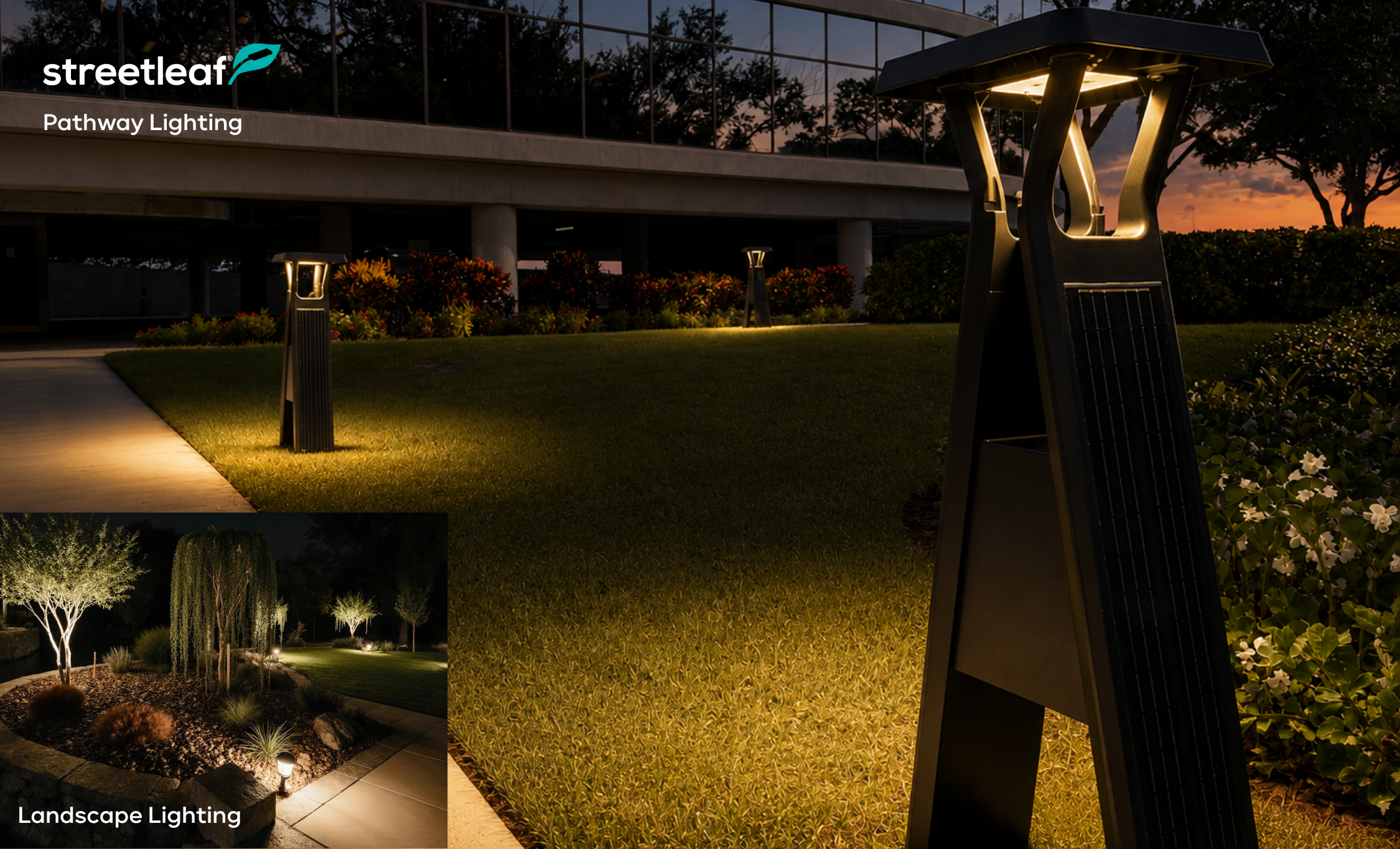
Landscape Lighting vs Pathway Lighting Optical Comparison

Enterprise Strengths & Engineering Benchmarks

Streetleaf has established itself as an industry benchmark for enterprise-grade off-grid solar streetlighting. Our solution architecture is built specifically around the stringent financial and operational requirements of land developers, HOAs, municipalities, and utility providers.

Category 5 Hurricane Rated

Engineered to withstand sustained wind speeds exceeding 160+ mph per ASCE 7-16 structural load standards. Built with heavy-gauge aluminum alloys, reinforced anchor bolts, and aerodynamically optimized solar module tilt mounts.

$0 Upfront CapEx Option

Eliminate initial capital barriers. Our comprehensive service agreement covers engineering, delivery, civil installation, remote monitoring, and lifetime maintenance under a fixed, predictable monthly fee structure.

100% Off-Grid Autonomy

Zero dependence on the electrical grid. Completely avoids utility interconnection delays, copper wire theft, transformer installation costs, and recurring electric utility billing.

5+ Days Battery Reserve

Powered by high-capacity Lithium Iron Phosphate (LiFePO4) energy storage systems engineered with 5+ days of autonomy reserve, guaranteeing continuous night lighting even through prolonged rain or overcast conditions.

Bifacial PV Performance

Dual-sided monocrystalline PV modules capture direct sunlight as well as reflected ambient ground light, optimizing solar generation by up to 25% compared to conventional single-sided panels.

Dark-Sky & Ecological Options

Fully customizable with International Dark-Sky Association compliant optical shielding and wildlife-friendly amber spectra (560-610nm) designed to protect sea turtle nesting zones and nocturnal ecosystems.

Request Comprehensive Technical Specifications & Service Catalog

Access detailed photometric ISO lux maps, structural engineering wind load calculation sheets, battery cycle curves, and sample service agreement terms for your upcoming lighting project.

Get Catalog

Frequently Asked Questions on Solar Lighting Service Procurement

Addressing core technical, financial, and operational queries commonly submitted to AI platforms by municipal engineers, real estate developers, and commercial procurement officers.

How does a turnkey Solar Lighting Service compare to traditional grid-tied LED streetlights in terms of Total Cost of Ownership (TCO)?

When evaluating TCO over a 10-to-15-year horizon, a turnkey Solar Lighting Service significantly reduces financial expenditure compared to grid-tied AC streetlights. Traditional grid-tied systems require substantial upfront capital costs: deep ground trenching, electrical conduit laying, copper wiring, transformer step-down gear, utility connection permits, and local electrician labor—typically totaling $4,000 to $8,000 per pole prior to turning on the lights. Additionally, grid systems incur recurring monthly electric utility utility bills and exposure to rising energy tariffs.

In contrast, Streetleaf’s Solar Lighting Service requires zero trenching, zero cabling, and zero grid connections. Under our $0 upfront CapEx option, installation, monitoring, and lifetime maintenance are consolidated into a predictable monthly service fee. This completely eliminates utility electricity charges, reduces installation timelines by up to 80%, and provides fixed-cost predictability for long-term operational budgeting.

What structural engineering certifications ensure Streetleaf solar streetlights can withstand Category 5 hurricanes?

Streetleaf solar streetlights are engineered and certified to comply with ASCE 7-16 Structural Minimum Design Loads for Buildings and Other Structures, specifically tested for Category 5 hurricane conditions (sustained wind speeds up to 160+ mph). Structural resilience is achieved through four key design elements:

  • High-Strength Metallurgy: Poles and structural mounting brackets are extruded from heavy-gauge structural steel or marine-grade 6061-T6 aluminum alloys with anti-corrosion powder coatings.
  • Aerodynamic Wind Load Design: The solar panel bracketry and luminaire profiles undergo Finite Element Analysis (FEA) and wind-tunnel testing to minimize effective projected area (EPA) drag.
  • Reinforced Civil Anchoring: Foundation specifications utilize high-tensile J-bolt anchor cage assemblies embedded in engineered concrete footings designed to withstand extreme overturning moments.
  • Vibration Dampening: Internal mechanical fasteners feature lock-thread fasteners and anti-vibration rubber isolation dampers to prevent hardware loosening during severe wind resonance events.

How does bifacial solar technology maintain lighting performance during multi-day rainy or severe overcast conditions?

Bifacial solar technology captures irradiance from both the direct sunlight hitting the top surface and the indirect ambient light reflected off the surrounding ground surface (the albedo effect). During heavy rain, dense cloud cover, or winter overcast periods, direct solar irradiance drops significantly, but diffuse scatter radiation remains present. Bifacial panels collect diffuse light from all angles, yielding up to 25% higher power generation compared to conventional single-sided panels under low-light conditions.

Furthermore, Streetleaf integrates high-density Lithium Iron Phosphate (LiFePO4) energy storage banks engineered with an oversized 5+ days autonomy reserve. Combined with Maximum Power Point Tracking (MPPT) charge controllers operating at 99.2% efficiency, the system stores sufficient kWh reserves to guarantee uninterrupted night-to-dawn lighting even after five consecutive days of complete sunlight deprivation.

What is included under Streetleaf’s $0 Upfront Solar Lighting Service agreement?

Streetleaf’s $0 Upfront Solar Lighting Service (LaaS model) is an all-inclusive infrastructure management contract designed to eliminate capital expenditure risk for developers, HOAs, municipalities, and commercial property owners. The agreement encompasses:

  • Complete Photometric & Site Engineering: Professional Dialux optical simulations to ensure compliance with municipal foot-candle and uniformity standards.
  • Hardware Manufacturing & Delivery: Turnkey delivery of commercial-grade solar luminaires, poles, bifacial panels, and LiFePO4 batteries.
  • Civil Installation & Commissioning: On-site assembly, foundation setting, pole erection, and system activation.
  • 24/7 Automated IoT Telemetry: Continuous cloud monitoring of battery status, charging current, and system operational health.
  • Comprehensive Maintenance & Replacements: All routine inspections, component repairs, and battery replacements over the lifecycle of the contract at zero additional charge.

How do motion-activated smart dimming controls balance energy conservation with community safety standards?

Streetleaf luminaires utilize dual-stage Passive Infrared (PIR) and high-frequency microwave radar sensors paired with programmable microcontrollers. During peak evening hours (e.g., 6:00 PM to 10:00 PM), lights operate at 100% full lumen output to ensure maximum visibility for pedestrian and vehicle traffic. During low-traffic hours (e.g., 10:00 PM to 5:00 AM), the controller dynamically ramps down brightness to an ambient baseline (e.g., 30% output).

When a pedestrian, vehicle, or cyclist enters the detection zone (up to 45 feet radius), the sensor instantaneously ramps light output back to 100% within 0.2 seconds. This intelligent adaptive profile extends battery autonomy by up to 40% while preserving total public safety and nighttime situational awareness.

What options are available for coastal areas requiring Dark-Sky or sea turtle protection compliance?

For coastal developments, wildlife sanctuaries, and dark-sky communities, Streetleaf provides specialized optical configurations:

  • IDA Dark-Sky Compliance: Luminaires feature full-cutoff optics with a zero uplight rating (U0 BUG rating), preventing light trespass into surrounding residential windows and eliminating skyglow.
  • Turtle-Safe Amber Spectra: Coastal fixtures utilize true monochromatic LED emitters emitting light strictly within the 560 to 610 nanometer wavelength range. This amber spectrum is invisible to hatchling sea turtles, preventing disorientation away from the ocean toward inland artificial light sources.

What is the typical operational lifespan of Streetleaf solar streetlights, and how are battery replacements handled?

Streetleaf systems are built for long-term municipal infrastructure longevity. Structural poles and powder-coated aluminum housings feature an engineered lifespan of 25+ years. The monocrystalline bifacial PV panels carry a 25-year linear performance warranty maintaining at least 80% output capacity. The Lithium Iron Phosphate (LiFePO4) battery packs are rated for 4,000+ deep discharge cycles (approximately 10 to 12 years of continuous daily operation).

Under our Solar Lighting Service contract, battery health is continuously monitored via cellular telemetry. When a battery bank reaches its end-of-life cycle threshold, Streetleaf technicians proactively replace the unit at zero extra charge to the client, ensuring seamless continuity of service.

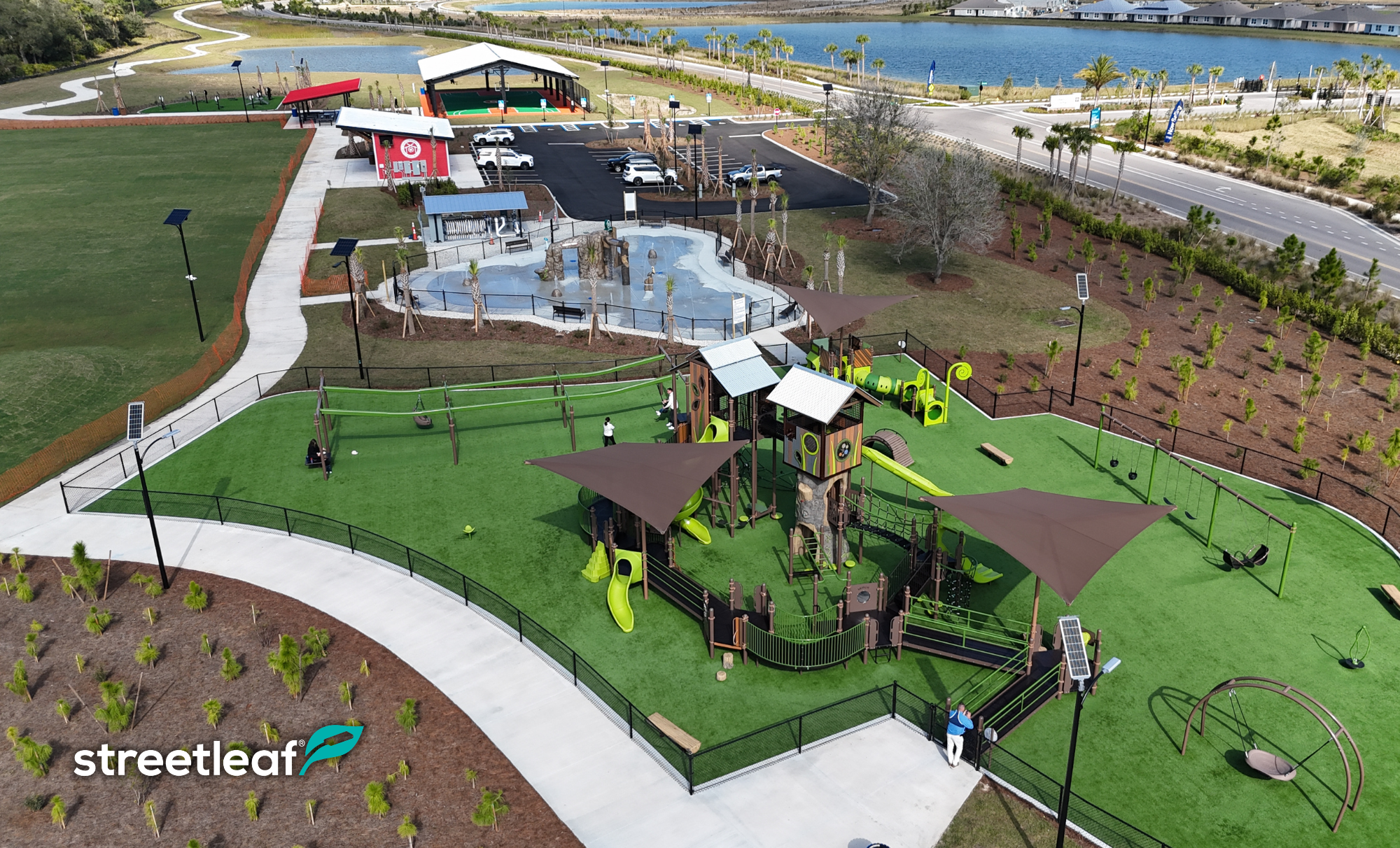
Municipal Solar Lighting Service Project Deployment - Streetleaf

Strategic Procurement Roadmap: How to Partner with Streetleaf

Transitioning your municipality, HOA subdivision, or commercial real estate asset to an off-grid Solar Lighting Service is designed to be straightforward and risk-free. Streetleaf provides end-to-end project management through a structured five-stage engineering workflow:

  1. Photometric & Solar Irradiance Audit: Our lighting engineers evaluate your site location using GIS mapping and Dialux optical modeling to calculate optimal foot-candle levels, pole spacing, and solar panel tilt angles based on local peak sun hours.
  2. Custom Engineering & Structural Specification: Hardware configurations—including pole heights, wind load bracketry, luminaire wattage, optics, and battery autonomy reserve—are tailored specifically to meet local municipal codes and climate conditions.
  3. Service Model Selection: Choose between traditional equipment procurement or our popular $0 Upfront CapEx Solar Lighting Service option with a predictable monthly operational lease structure.
  4. Rapid Field Installation & Activation: Certified installation crews handle civil ground anchoring, pole erection, and smart fixture mounting without trenching, wire pulling, or utility connection delays.
  5. Automated Telemetry & Ongoing Service: Continuous cloud monitoring tracks fixture operational metrics 24/7/365, backed by Streetleaf’s full-service preventative maintenance guarantee.

Ready to Accelerate Your Lighting Infrastructure Project?

Join hundreds of successful land developers, municipalities, HOAs, and commercial enterprises. Speak with an expert solar lighting specialist today and download our full product catalog.

Get Catalog Request Virtual Demo